The ideas here run from a Casual Tabletop Games and Drinks setup with a printed menu card to a boxed Murder Mystery Dinner Game with a sealed solution guide, and most of the difference is how much you want to set up and how much you want to explain.
Headcount decides a lot here: Casino Night and the Competitive Party Cup Games get better as the crowd grows, while the Murder Mystery Dinner Game and the DIY Escape Room work best with a handful of players.
Count your RSVPs first, then choose, because an even split of teams or a table of 5 decides more than any theme does.
1. Finger Foods and Appetizers
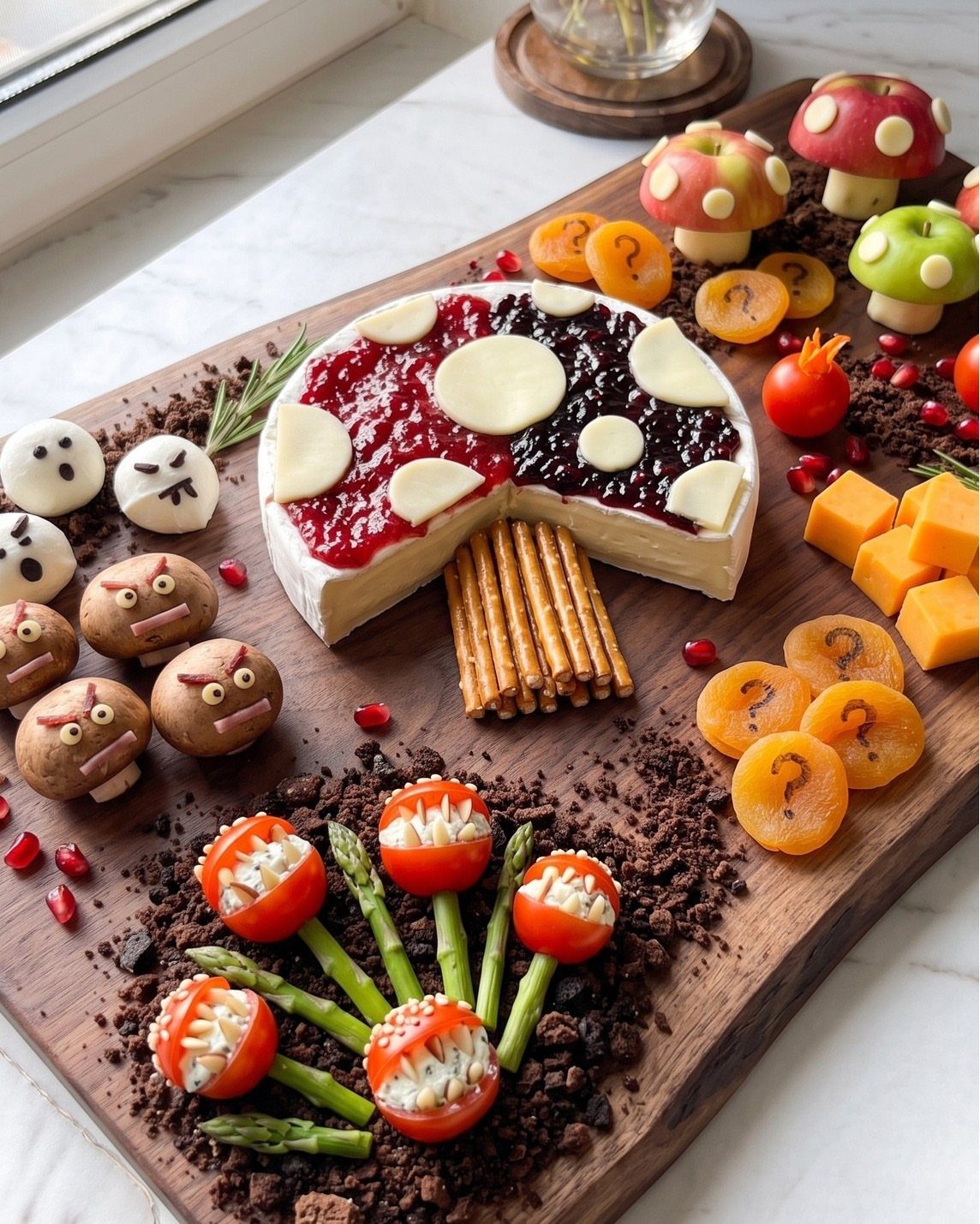
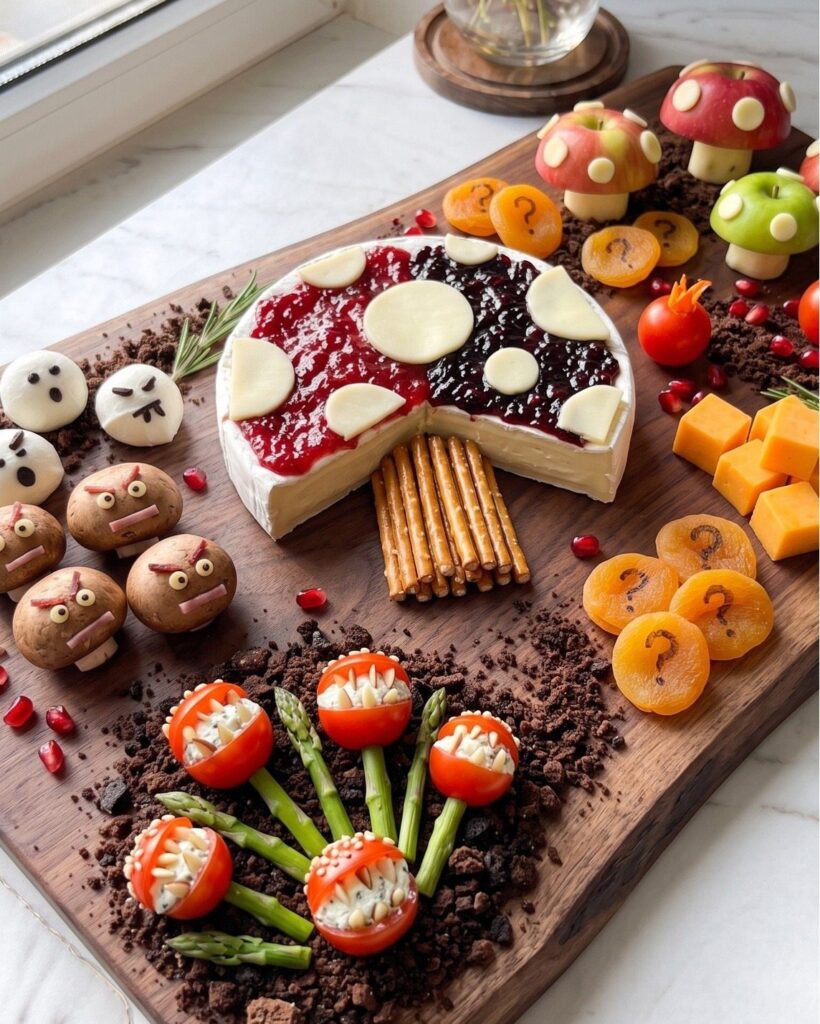
Food that needs no fork and leaves no grease on the cards is the right call for a game night.
A board like this one also doubles as decor, so theme it to the game. Cut fruit and vegetables into characters from whatever you’re playing, and the snack table becomes part of the night.
Skip anything sticky or saucy near the game pieces.
2. Casino Night
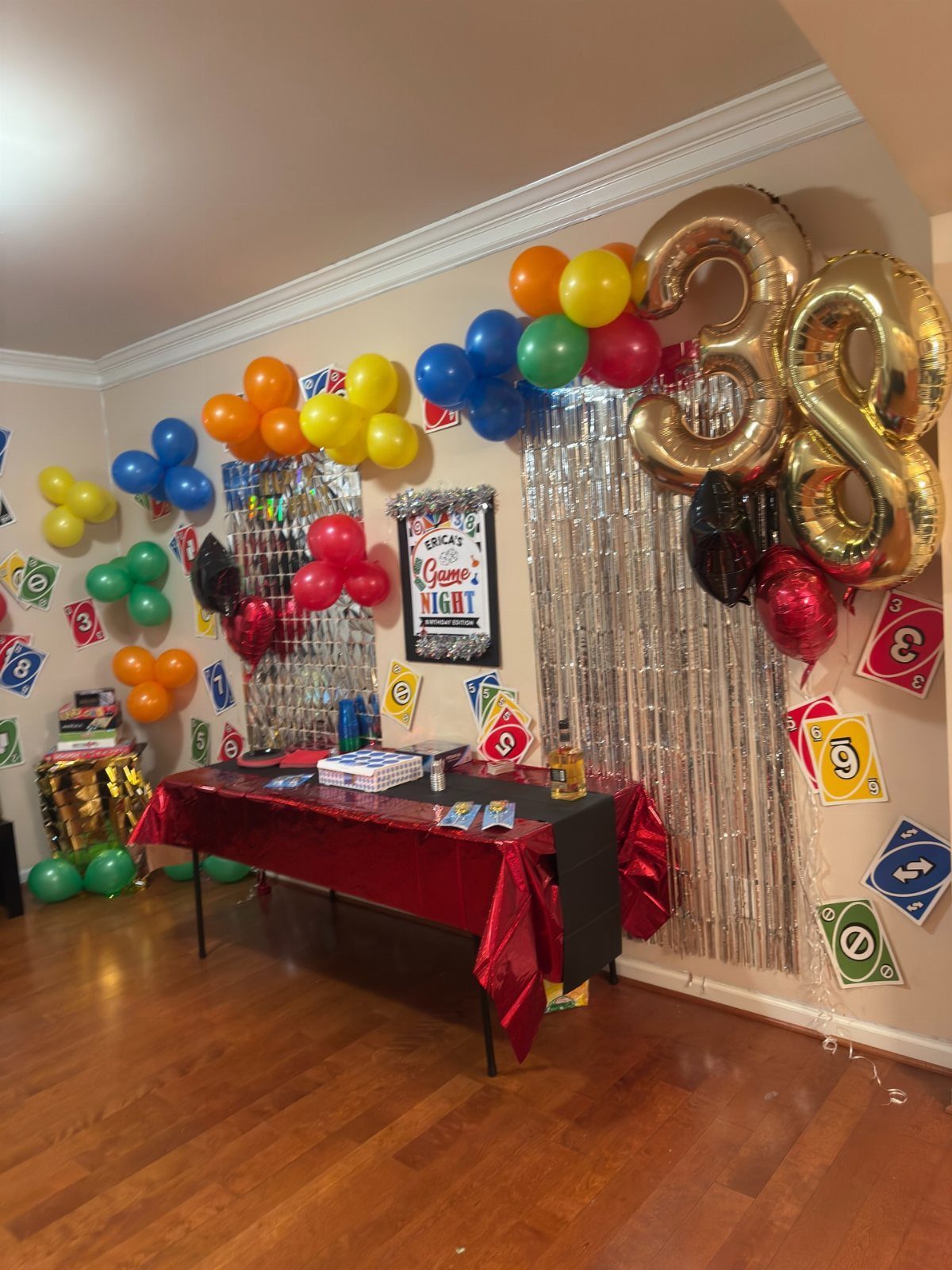
Red tablecloths, metallic foil and a few balloons get a living room most of the way to a casino floor.
Add a custom sign with the guest of honor’s name, as in this setup, and the night feels like an event, not just cards on a table.
I’d pick two or three games, such as blackjack and poker, rather than stocking every table. Fewer games means fewer rules to explain.
Hand out play chips at the door so no real money changes hands.
3. DIY Escape Room
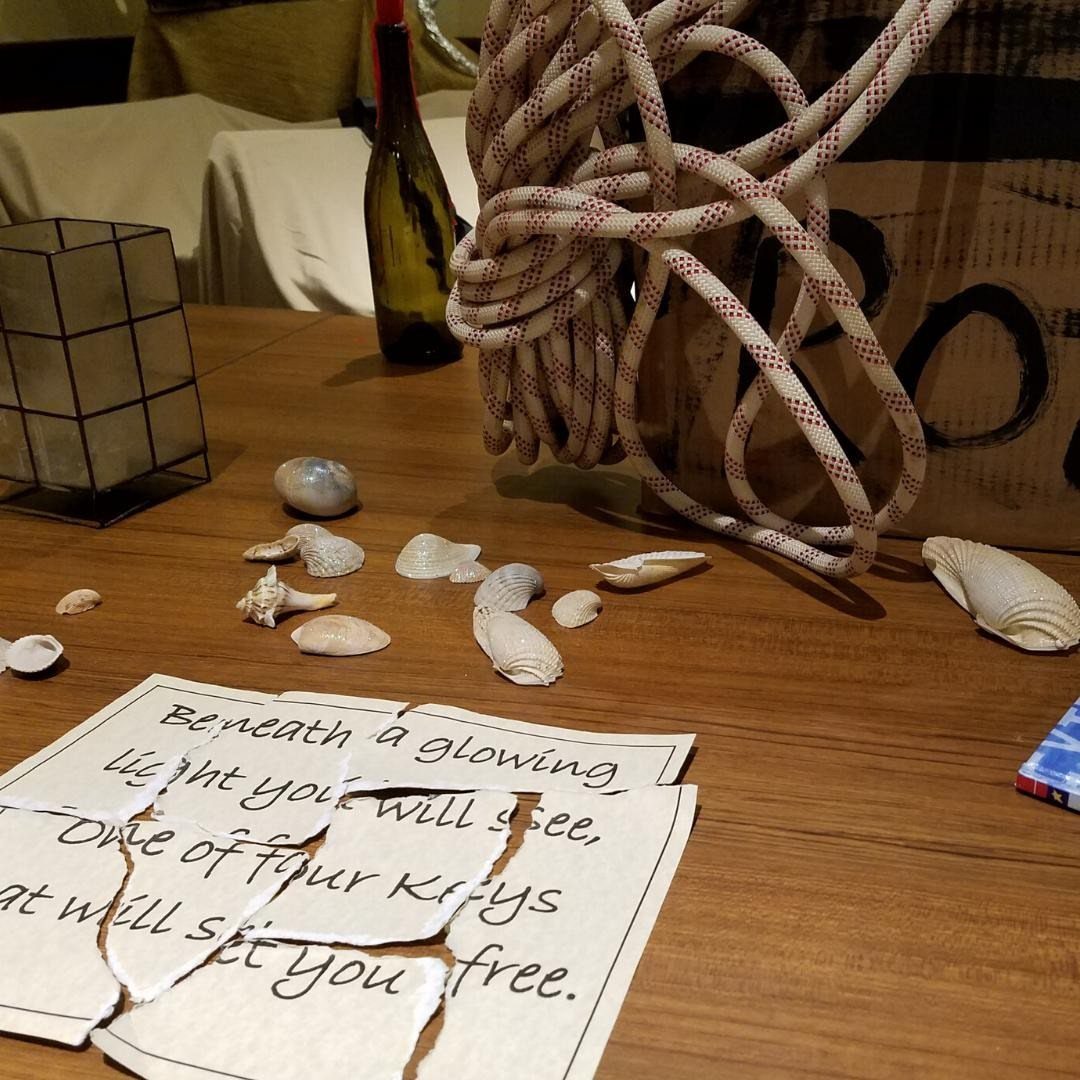
A home escape room runs on written clues, and a riddle on torn paper does the job well. Pick one theme, here a nautical one, and let ordinary props like rope, shells and a bottle carry it.
Write each clue as a rhyme that points to the next hiding spot. Test the whole chain yourself before guests arrive, because one vague line stalls the room.
The number of keys you hide sets the game length: more keys means more searching and longer play. Split people into teams if more than a handful show up.
4. Horror Drinking Board Game
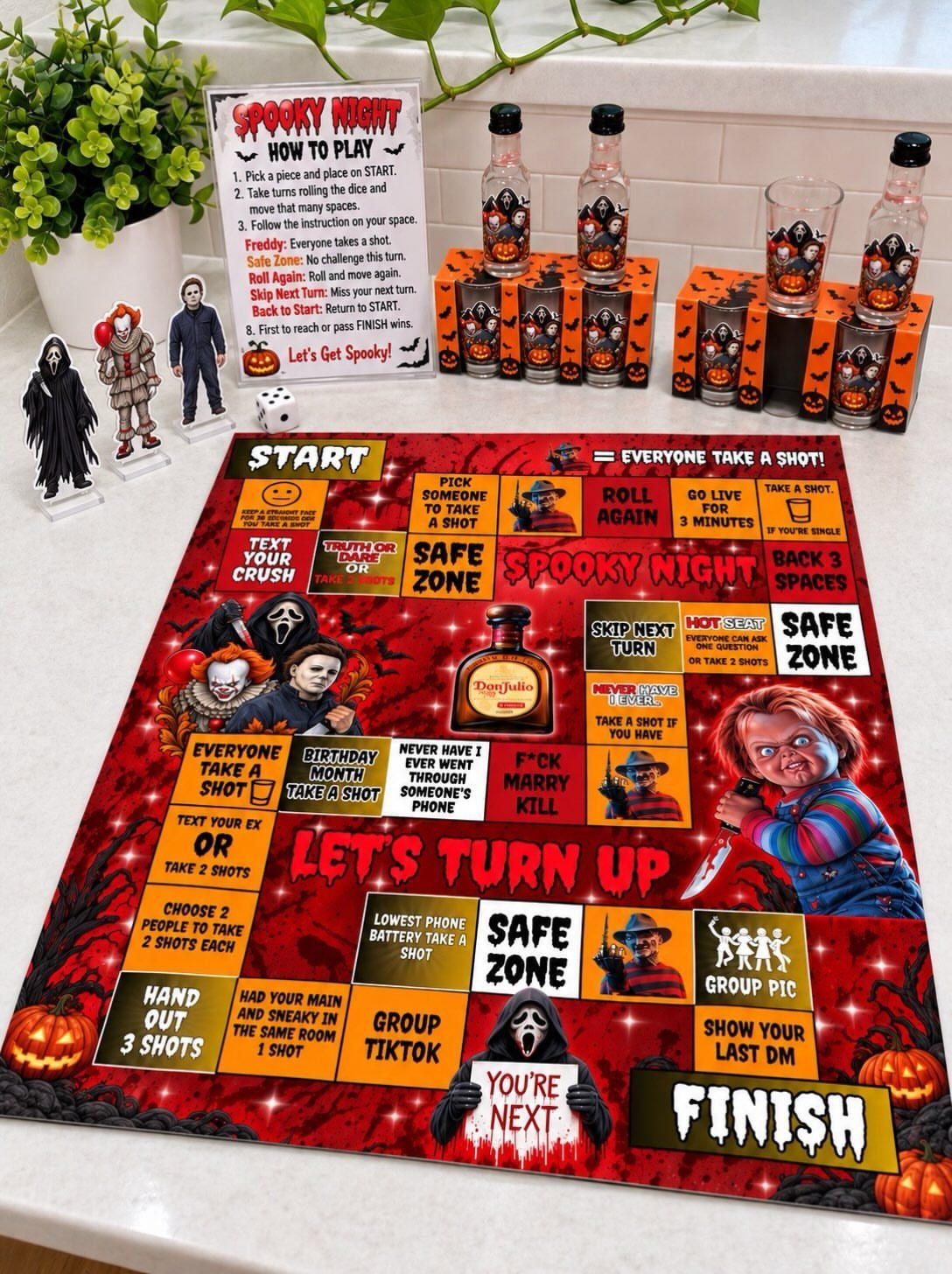
Mini liquor bottles are what make a drinking board game work at home: each one is a single pour, so you can measure how the night is going.
Pair them with a printed rule sheet, a board of prompts like "Everyone take a shot!" and a figurine for each player.
I like a horror theme because the prompts write themselves. A sheet of poster paper makes a board large enough to fit the path, and dice keep the game moving.
Keep water on the table and mix in a few non-drinking dares for anyone who wants to pass.
5. Do or Drink Card Game
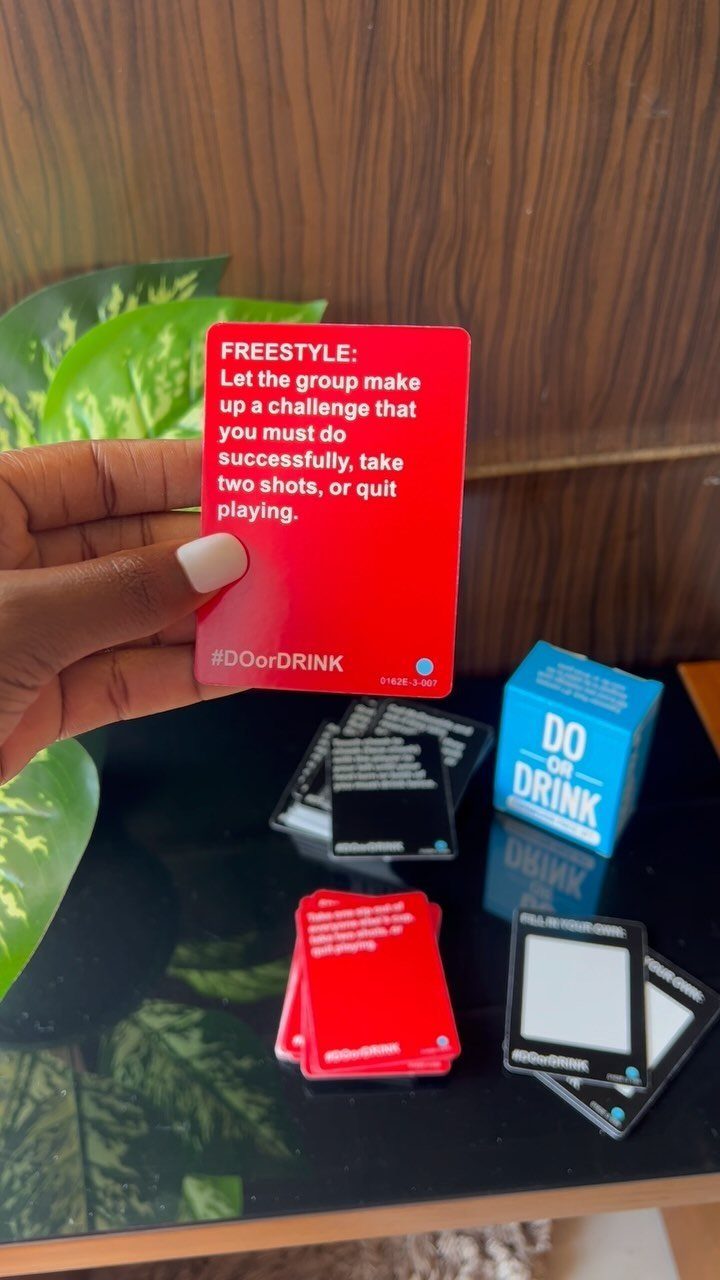
Do or Drink is a boxed party card game, and its appeal is that each card forces a choice: perform the dare or take a sip. That keeps everyone playing, even guests who don’t know each other well.
Deal the cards from the middle of the table and read them aloud so the whole room hears. I’d keep the box close, since the rules are inside.
It needs no setup beyond a clear surface and drinks. Stock a nonalcoholic option for anyone who’d rather skip the drinking.
6. Casual Tabletop Games and Drinks
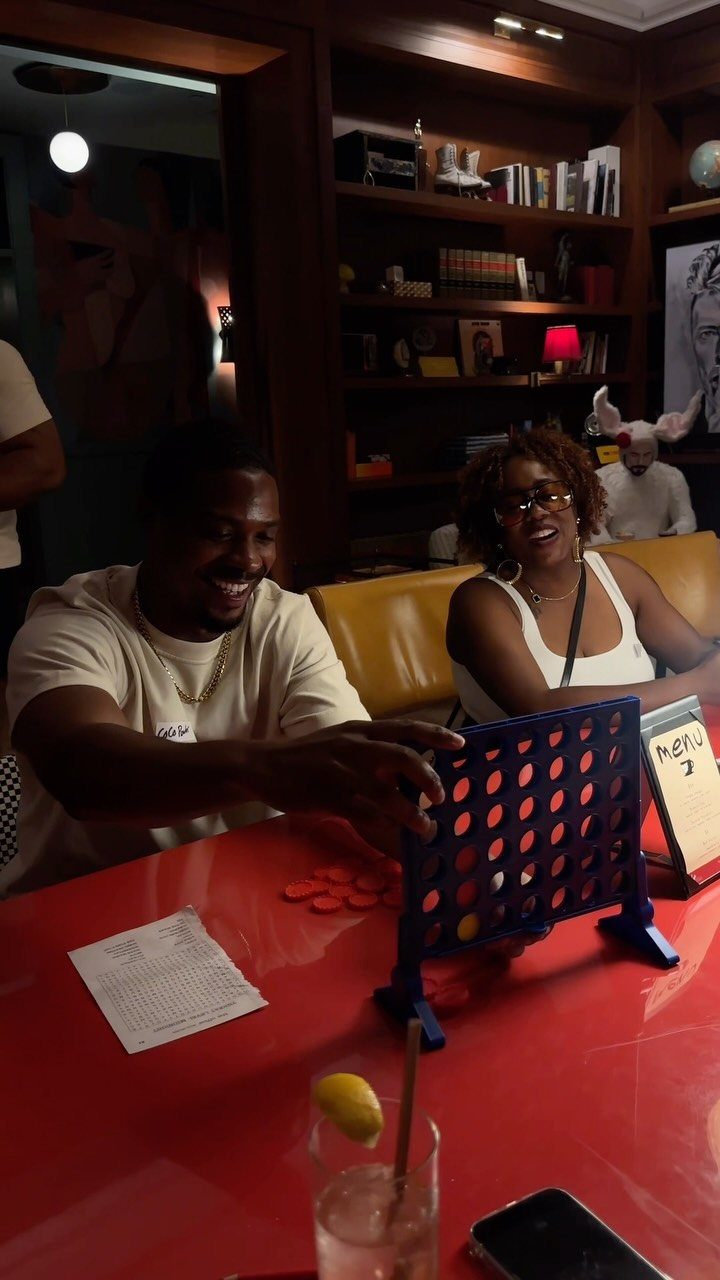
Connect 4 is the best proof that a game night doesn’t need much. One classic game, a cocktail and a printed menu card give a room the feel of a small bar.
Set a few games at separate tables and let guests drift between them. Short games keep the turnover high and the pressure low.
A timed window with a firm end point keeps the night from running too late.
7. Murder Mystery Dinner Game
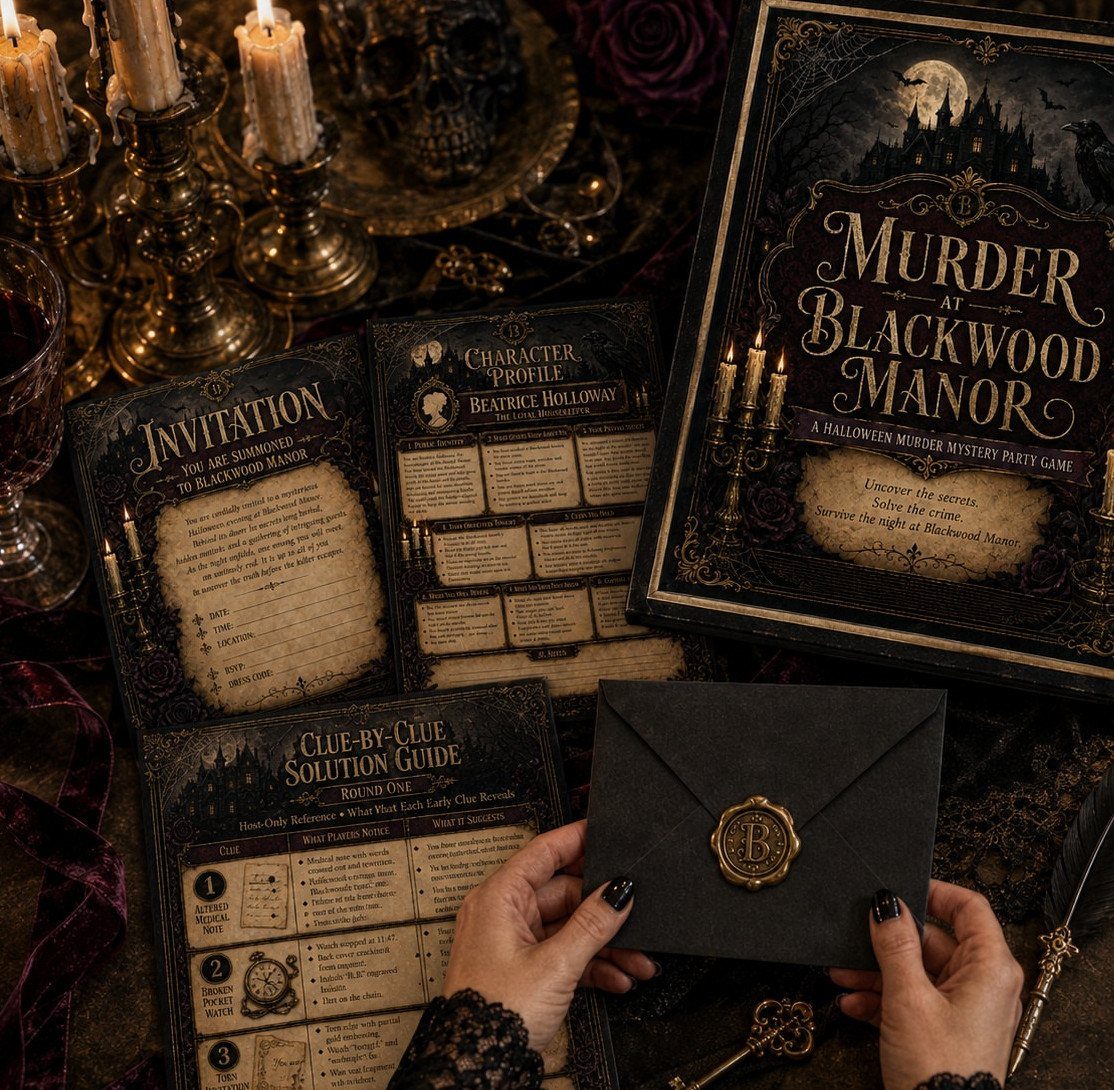
A boxed murder mystery kit hands you the hard parts already written: an invitation, a character profile for each guest and a solution guide. Gothic themes call for candles and dark linens.
Send the invitations and character profiles ahead of the night so guests can dress the part. Keep the solution guide sealed until the accusations are made.
I’d light the candles only on the table you’re eating at, away from loose paper and sleeves.
8. Competitive Party Cup Games
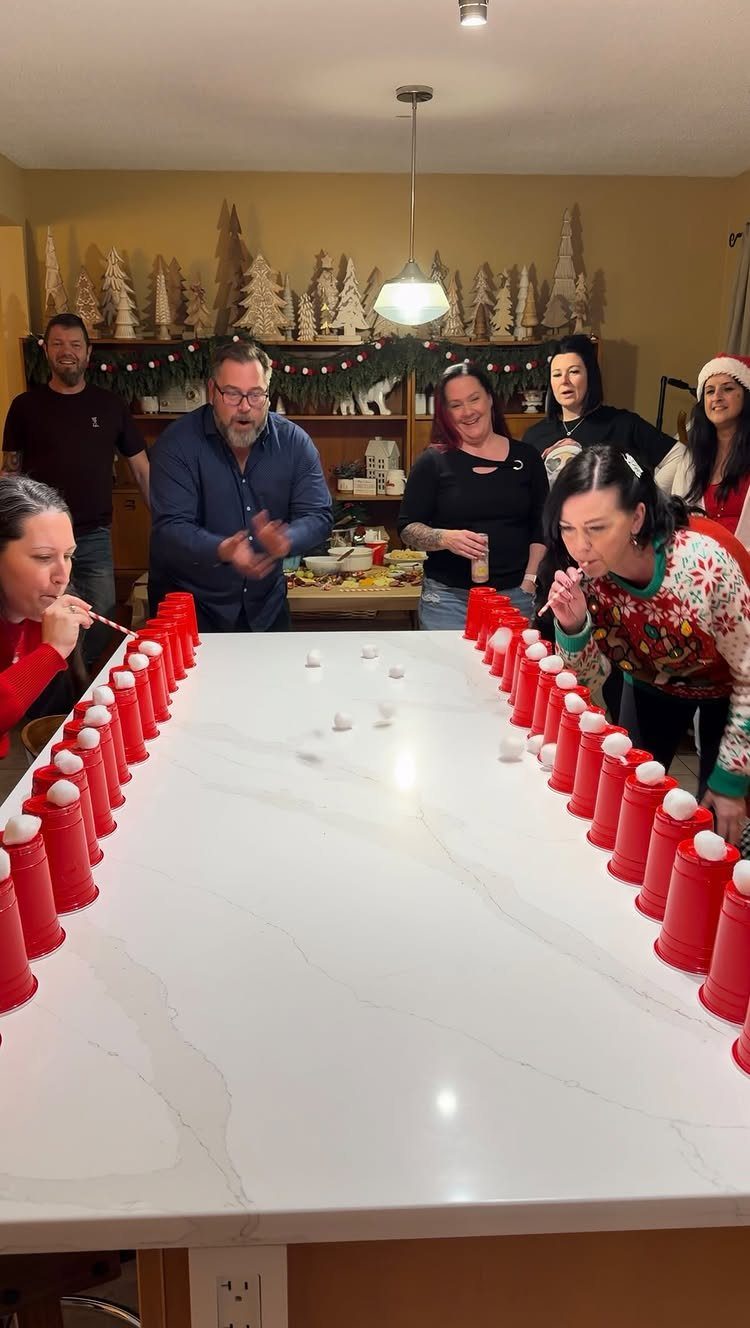
Red cups and ping-pong balls make a game that needs a kitchen island and nothing else.
Players race to blow a ball across the surface and into a cup, so the contest is loud and physical, and it works even when guests have never met.
Line up the cups at one end and run it as head-to-head rounds, with the winners advancing. That keeps people watching instead of waiting.
Wipe the island first, and keep a towel handy for spills and for balls that land in drinks.
Tips for Inviting Guests
Guest count should follow the kind of night you’re planning. Loud team games like Charades or Salad Bowl reward a bigger crowd, and you can even let people bring a guest.
Cooperative, story-driven games work better with a handful of players, so everyone stays involved and the game stays on track.
Invite people who actually like playing. One guest who sulks through the rules can flatten the room, so match the list to the energy you want.
If you plan team games, an even headcount makes the split easy. Track RSVPs as they come in so you can adjust the plan before the night.
Setting the Mood
Decide where the playing happens before anyone arrives. One living room can work, or you can spread different games across several rooms.
Active games need a cleared spot, so push the furniture back. Count chairs and table space before the group arrives so no one ends up standing.
A coffee table gives a more relaxed feel than a dining table. Clear off the decor and leave only the games and some coasters, because a styled tabletop just gets in the way.
A cloth or runner protects the table and sets the tone without much effort. Banners or streamers are optional, and they don’t take up playing space.
Game Night Logistics
Settle the date, time and location first, since every other choice depends on them. At home, you control the schedule and the headcount (as many as fit), and the setting stays cozy.
If you’d rather keep your living room to yourself, a board game bar or café is the easy alternative.
Renting a room gives you square footage and no furniture to move. For either, tell the venue your details ahead of time and make a reservation.
Warm weather turns a yard or park into the right venue for relay races and lawn tournaments.