Your room decides which of these fun office games you play: a few feet of open carpet suits bean bag toss, a clear aisle suits the blindfold walk, and a remote team needs something built for video calls.
The ideas run from a blindfold challenge that costs nothing to a stack of cups, a pot of chili and a handful of sticky notes.
Most need only cups, sticky notes or a bean bag, and none asks anyone to perform alone in front of the whole floor.
1. Blindfold Navigation Challenge

A blindfolded player working toward a marked square with a partner’s directions comes down to one thing: how clear the voices are.
Pick one target, like a square of tape on the floor, and keep the path free of chairs and cords.
I’d let the watching colleagues do the guiding, but only one person speaks at a time. Otherwise the walker hears noise and not directions, and the game falls apart almost as soon as it starts.
A scarf works fine as a blindfold, and it costs nothing.
2. Forehead Cup Catch Game
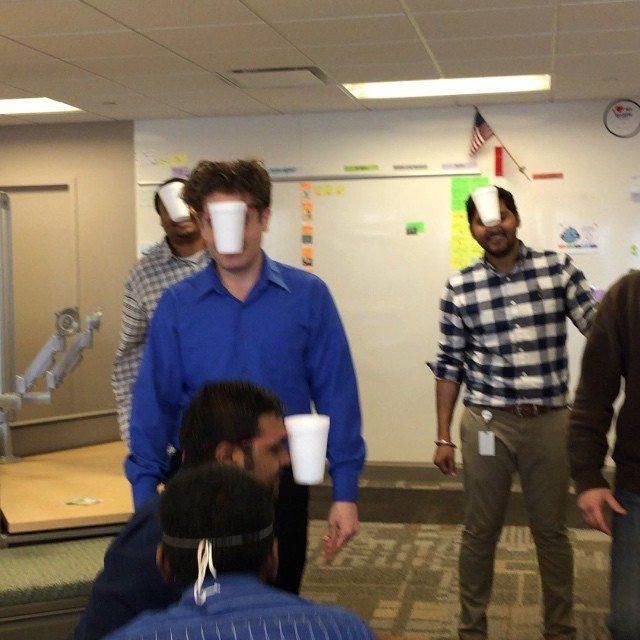
Strapping a plastic cup to each forehead with a headband makes a simple game look ridiculous in the best way. Anyone can play, and the gear is a pack of cups and a few headbands.
Settle the catch rule before the first round: what gets tossed, from how far, and whether hands are allowed once it’s in the air. Hands-off is harder and funnier, so I’d start there.
Keep rounds short so everyone gets a turn at the cup.
3. Office Question of the Day
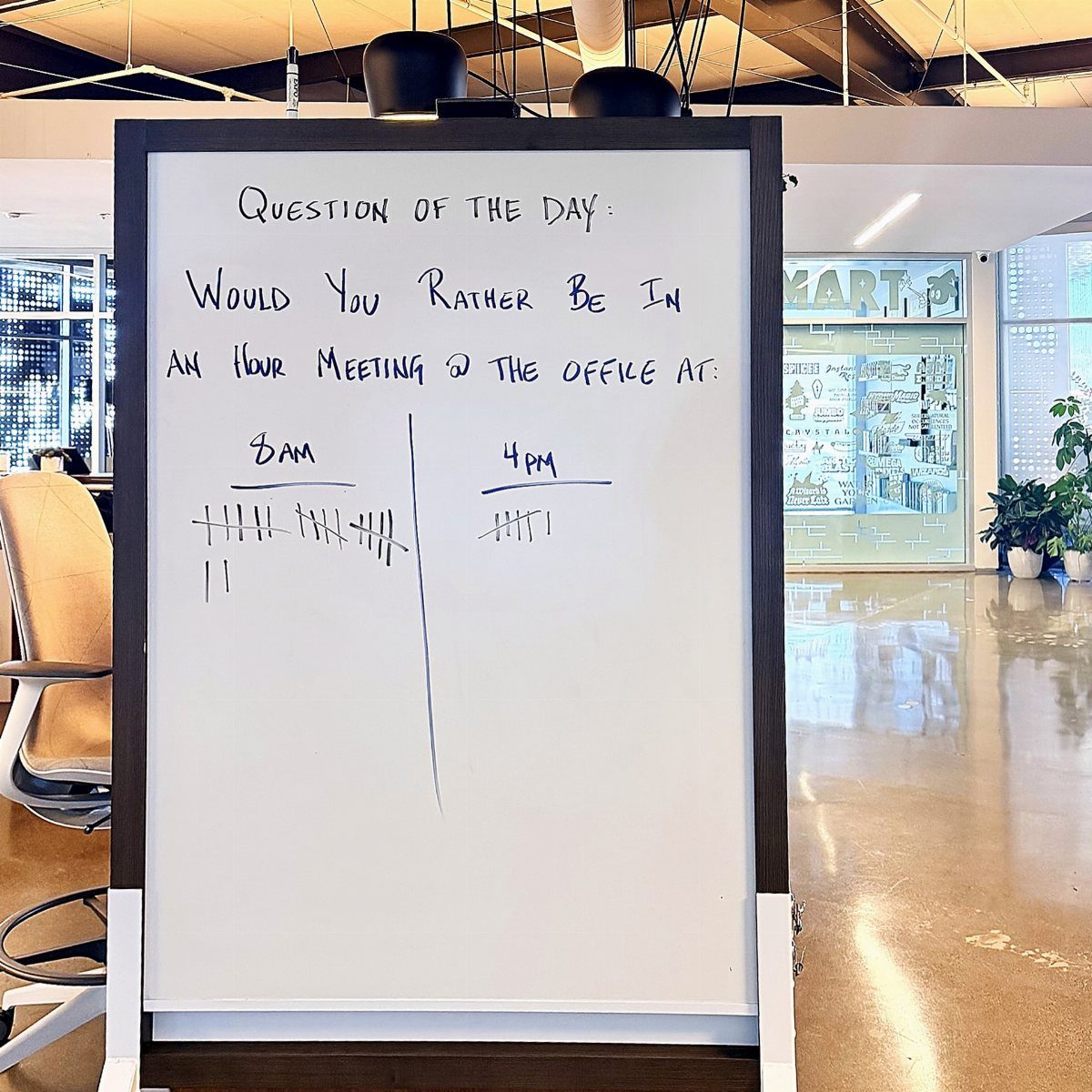
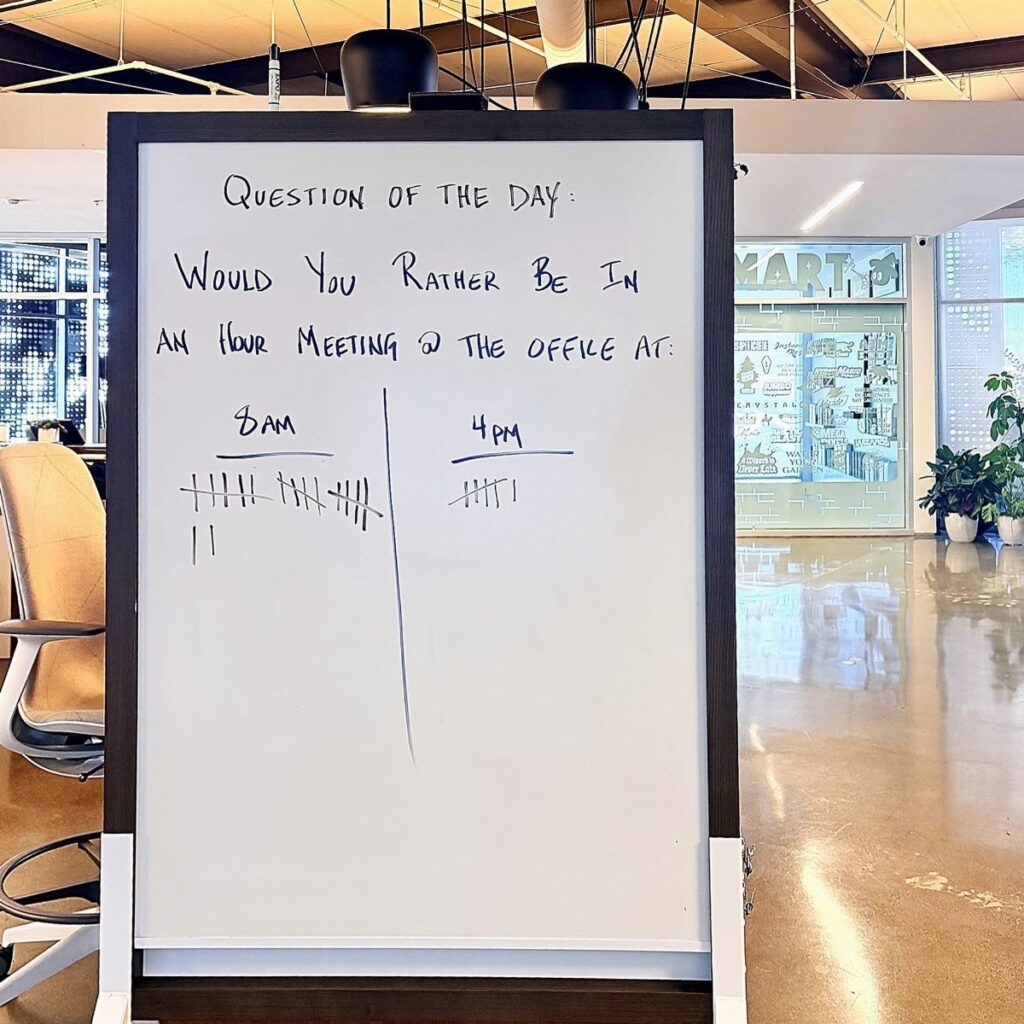
Some office habits cost nothing, and a portable whiteboard with one daily poll is among the cheapest. A "would you rather" question works well because staff answer with a tally mark and walk on.
Write the question first thing in the morning, set the board where people pass it, and hand over a marker. Keep the choices small and low stakes; a meeting time is a fine example.
Wheel the board to a new spot each week if it starts getting ignored.
4. Speed Math Challenge
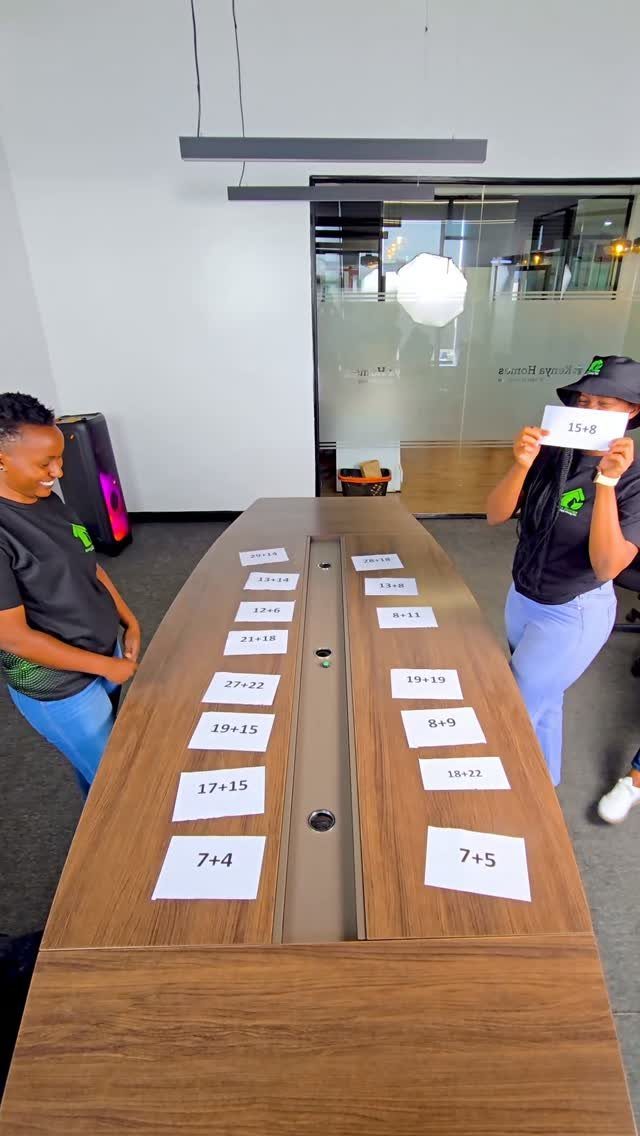
Two players, one table, and a pile of slips like "15+8": that’s the whole setup. Write a simple problem on each slip, spread them out, and let the pair race to solve them.
I prefer easy sums over hard ones. Mental math under a coworker’s stare gets stressful quickly, and keeping the numbers small keeps it a game and not a test.
Decide in advance how you’ll score it: most slips solved wins, and a tie gets one more slip.
5. Head Shoulders Knees Cup Grab
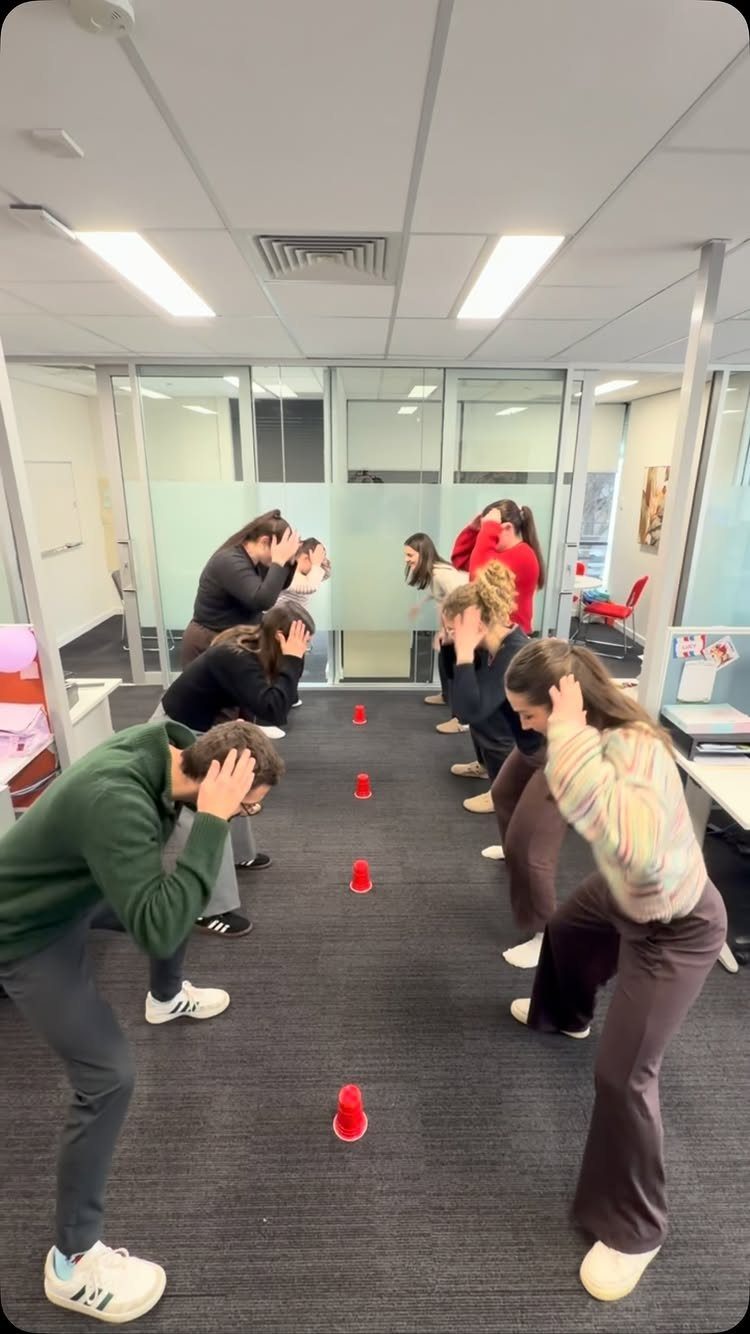
2 lines facing each other, hands on heads, cups on the floor between them: it’s a reflex game with a built-in tell. Players bent over with hands on heads can’t cheat by getting a head start.
Set one fewer cup than players per side, so someone is always left out.
A leader calls the moves, and the cup grab comes after a surprise cue. Red plastic cups cost very little.
Call the cue at random, because a predictable rhythm makes the game dull.
6. Office Bean Bag Toss
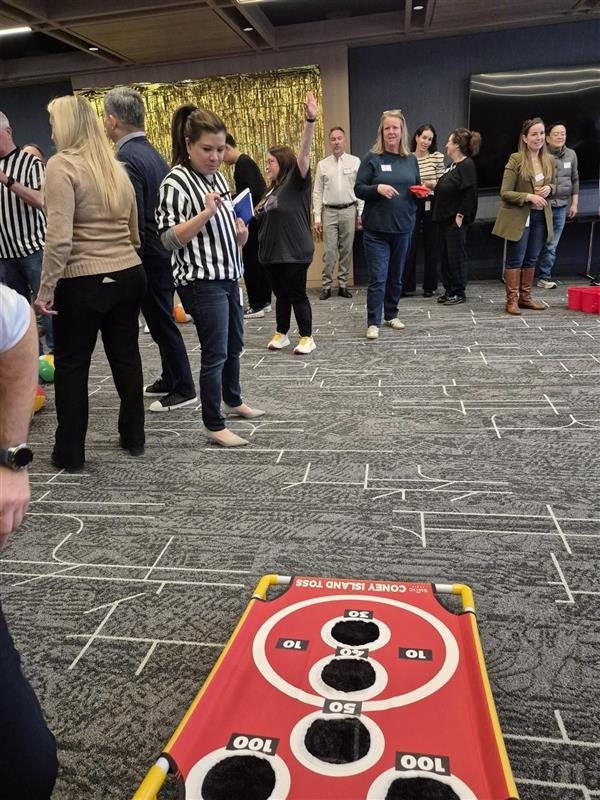
A red target mat on the carpet turns bean bag toss into something an office can play in a few feet of open floor. Floor targets also mean no frame to store.
Pick teams so players can rotate through without a long wait, and give each player the same number of bags per turn. I’d keep the scoring simple, since colleagues cheering matters more than the math.
Mark a throwing line with tape so nobody inches closer.
7. Office Chili Cook Off

Wooden spoons and "1st Place" and "2nd Place" signs are all the prizes a chili cook off needs. Cheap props make the winners feel like winners, and nobody has to buy a trophy.
Settle the judging before anyone plugs in a slow cooker. I’d give every colleague one vote and a small slip of paper, so the count takes a minute and the result is public right away.
A banner behind the table gives you a winners’ photo spot for free.
8. High Sticky Note Challenge
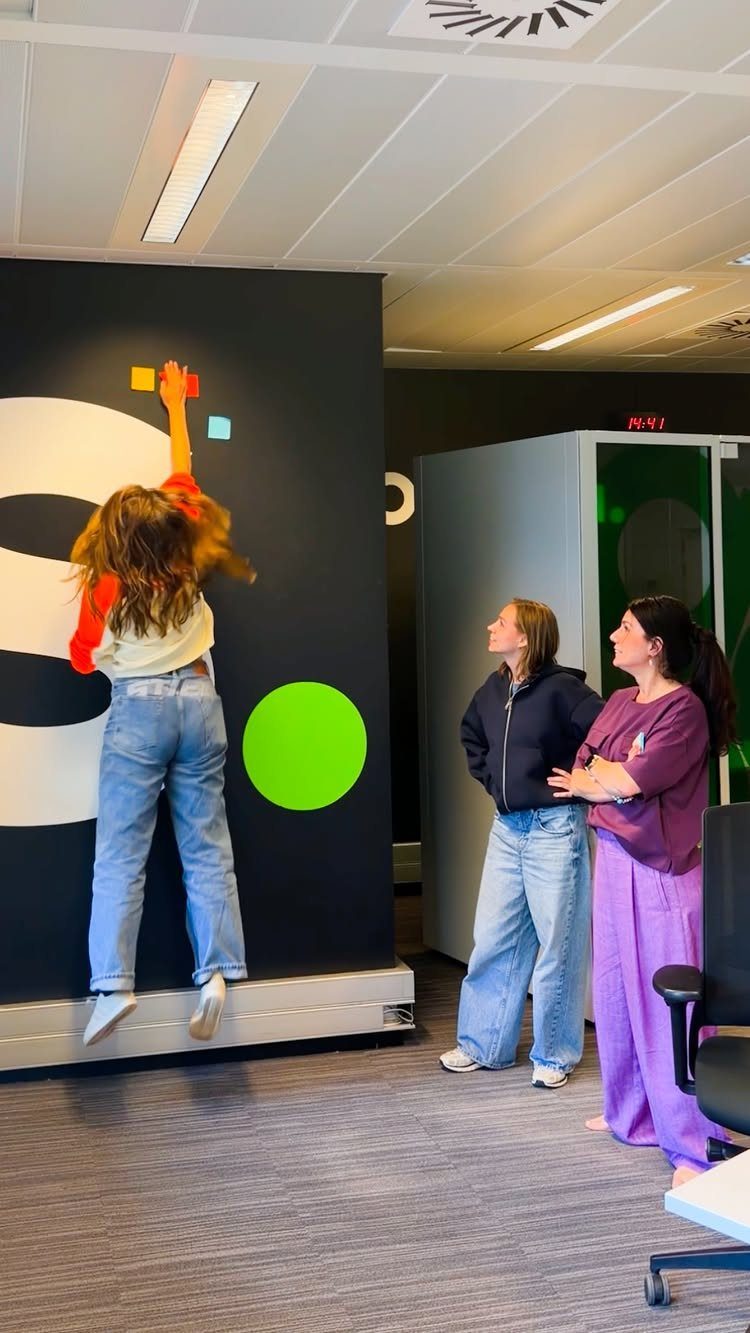
Sticky notes slapped onto a wall as high as a jumper can reach: that’s a contest you can set up with one pad and a clear stretch of wall.
Colorful notes make each player’s best height easy to see at a glance.
Give every player the same number of notes and one jump per note, then compare whose stands highest. I’d put a tape line on the floor so nobody gets a running start.
Pick a wall that tolerates sticky notes, and keep the floor beneath it clear for landings.
Benefits of Office Games
Games give coworkers a reason to talk about something other than the task in front of them.
That matters most for people who rarely share a room, because remote employees tend to have slightly weaker bonds with colleagues than those who work in the same building, and some can feel acute loneliness.
A crowded office doesn’t fix this on its own. Someone can feel isolated in a room full of coworkers, so pick activities that pull in every person and not just the loudest few.
Connection can’t be automated. Games break the ice, help colleagues know each other as people, and build the loyalty to a team that keeps them working toward the same goal.
Communication and creativity improve when a game requires the group to talk to finish it. Choose ones where silence isn’t an option.
Tips for Organizing Games
Start with the goal, since each one calls for a different kind of game.
- Get ideas flowing before a brainstorm: something creative that takes a few minutes.
- Learn more about your team: short games or icebreaker questions that lighten a meeting.
- Welcome a new hire: icebreaker questions and quick games that connect them with everyone.
- No big goal at all: just give people a reason to talk. That is a perfectly good purpose.
Then match the game to your headcount and the minutes you can spare. A five-minute game fits the start of a meeting; anything longer needs a protected slot.
Inclusivity is the last check. Quiet people and loud people both need a way in, so favor games where nobody has to perform alone, and let anyone watch or help score if they’d rather.
Virtual Vs. In-person Games
Your team’s setup decides the game before anything else does. Some quick games work better in the office, and others suit a remote group.
Remote workers say a quick game before the meeting starts gives them something to look forward to and pulls them out of task mode for a minute. I’d treat that as part of the leader’s job, not a bonus.
If your team logs in from different places, these all work over video call:
- scavenger hunts where players grab things from their own house or hunt for specific GIFs
Don’t force an in-person game onto a screen. Pick one built for the format your team actually works in.
Frequently Asked Questions
What are some funny and engaging team building activities?
Charades, trivia quizzes, and scavenger hunts are reliable picks. Over video, a scavenger hunt still runs fine: players race to grab an object from their own homes, or track down a particular GIF.
What games to play when bored at work?
2 Truths and a Lie, Office Bingo, and Pictionary are the usual boredom fixers. If you want something with almost no setup, put a portable whiteboard where people pass it and post one "would you rather" question a day.