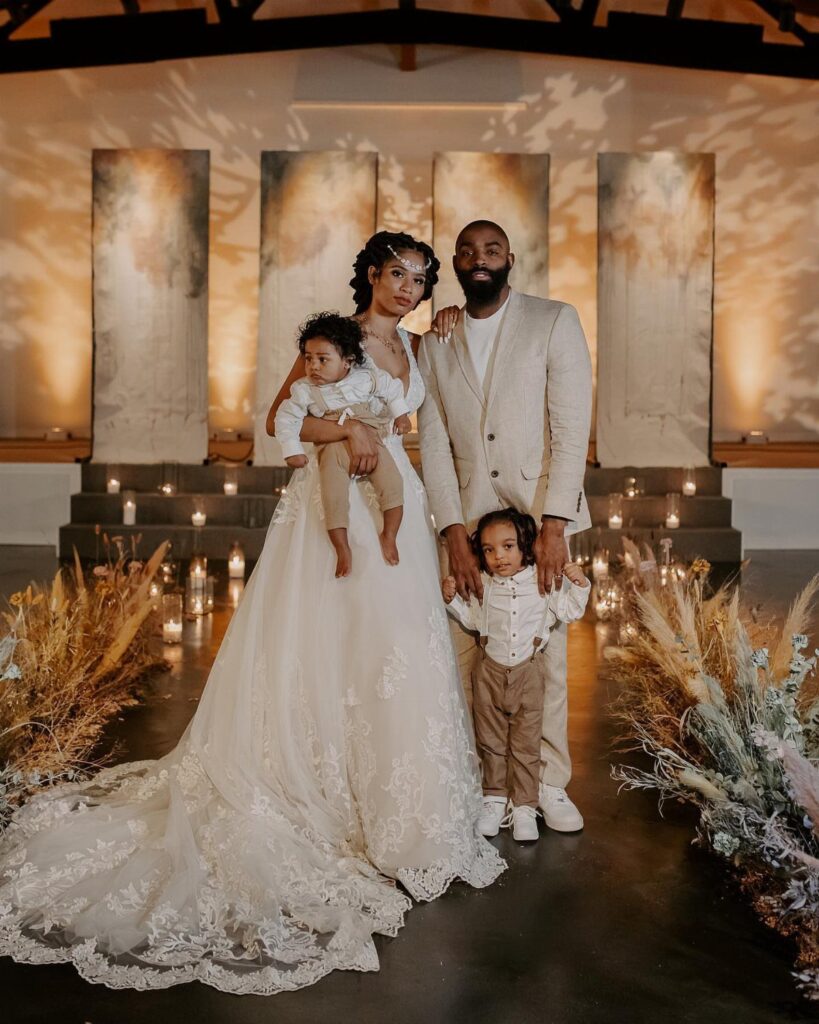
Ideas in this list run from a backyard afternoon that costs next to nothing to a full destination weekend, and the one thing that sorts them is your budget figure, which limits the venue, the guest count and the vendors that come after it.
Settle that number first, then pick the setting it can carry. Black linens with pillar candles in glass cylinders suit a reception table, and a destination beach ceremony needs little more than an officiant and a short guest list.
1. Commemorate a Milestone Anniversary
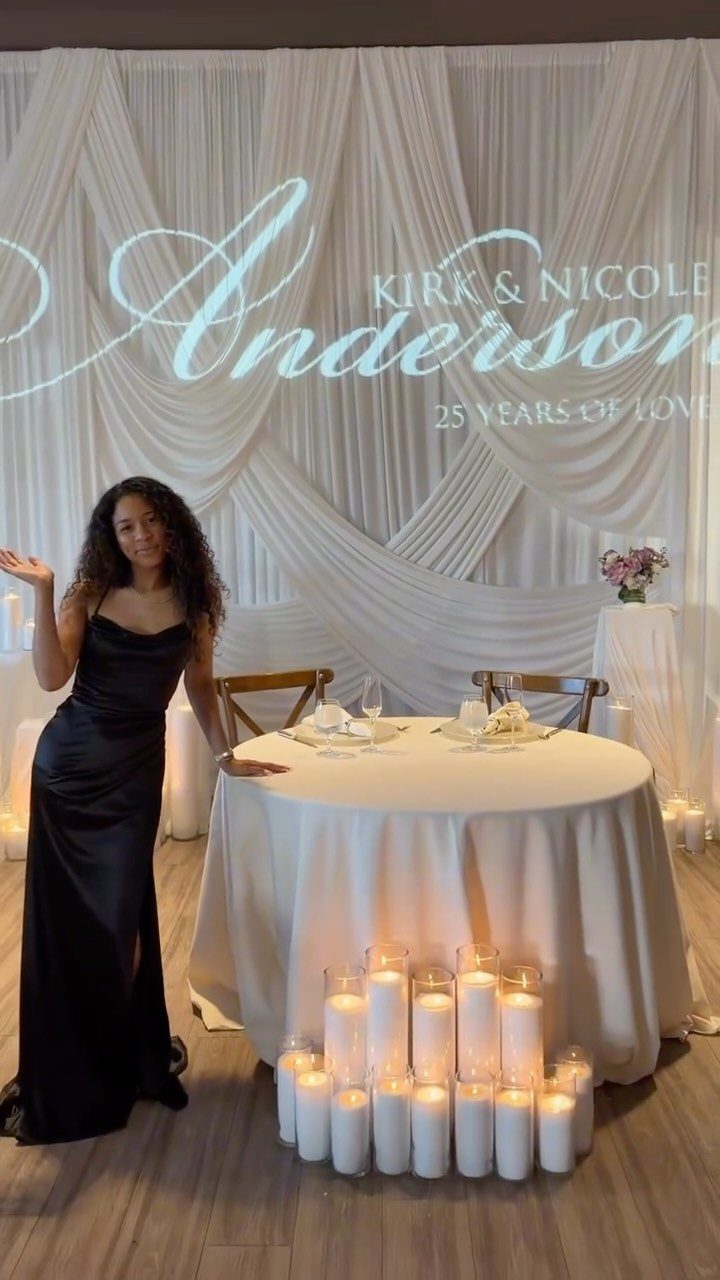
A backdrop that carries both names and the number of years does most of the decorating for you. A milestone anniversary gives the day a clear reason to exist, and guests know what they’re celebrating before anyone speaks.
Pick one milestone and print the number large. If your budget is tight, spend it on the backdrop lettering and skip extra decor.
2. Children in Ceremony
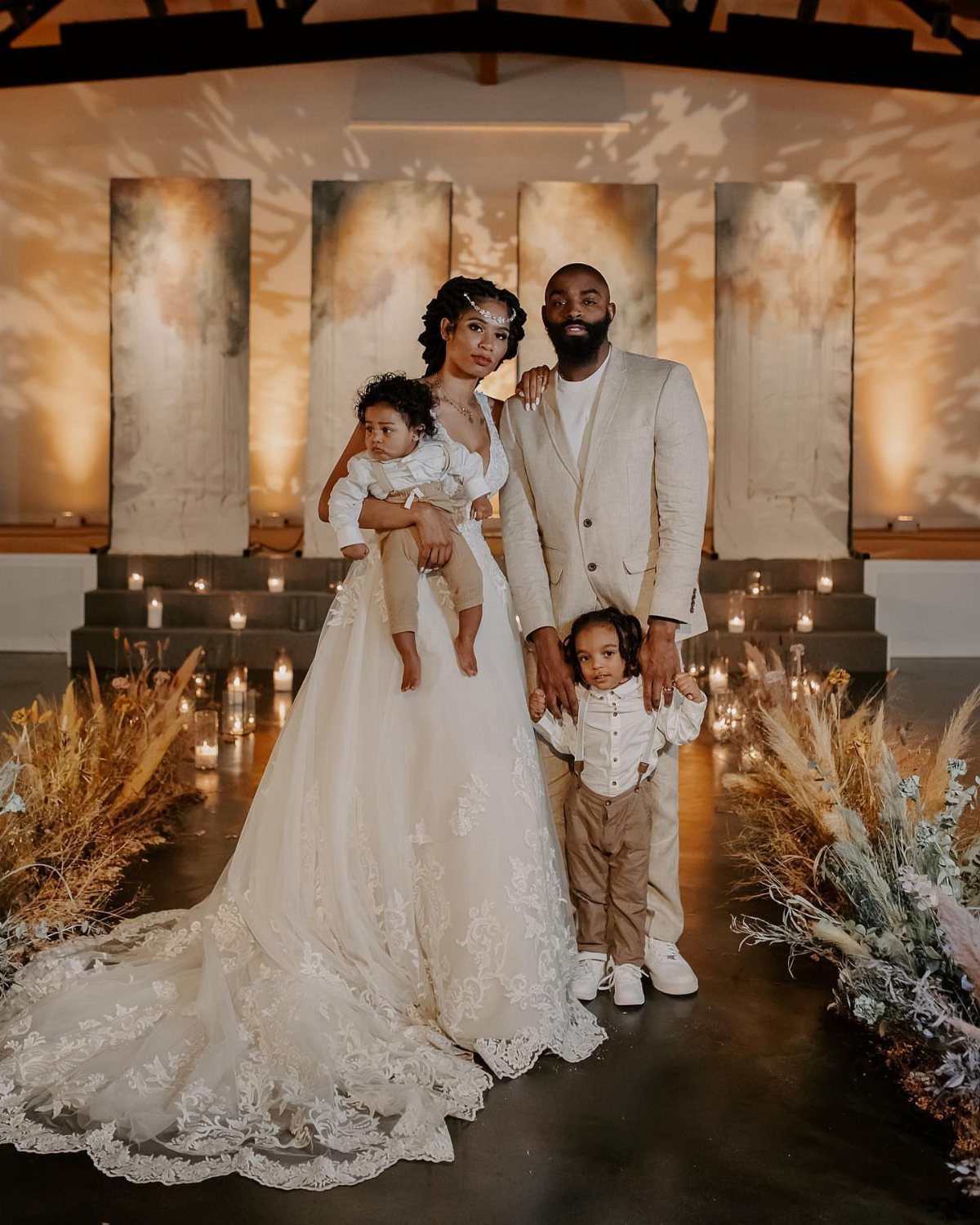
Kids standing in the portrait changes what a vow renewal means: the marriage now has people in it who grew from it.
Give each child or grandchild one small job, such as walking in ahead of you or standing beside you during the vows, so they feel part of the ceremony instead of watching it.
I’d keep their jobs short and let them wear something that matches the palette. Candles and florals make a good backdrop for a family portrait, so schedule that photo right after the ceremony, before attention spans run out.
3. Destination Vow Renewal Beach Ceremony
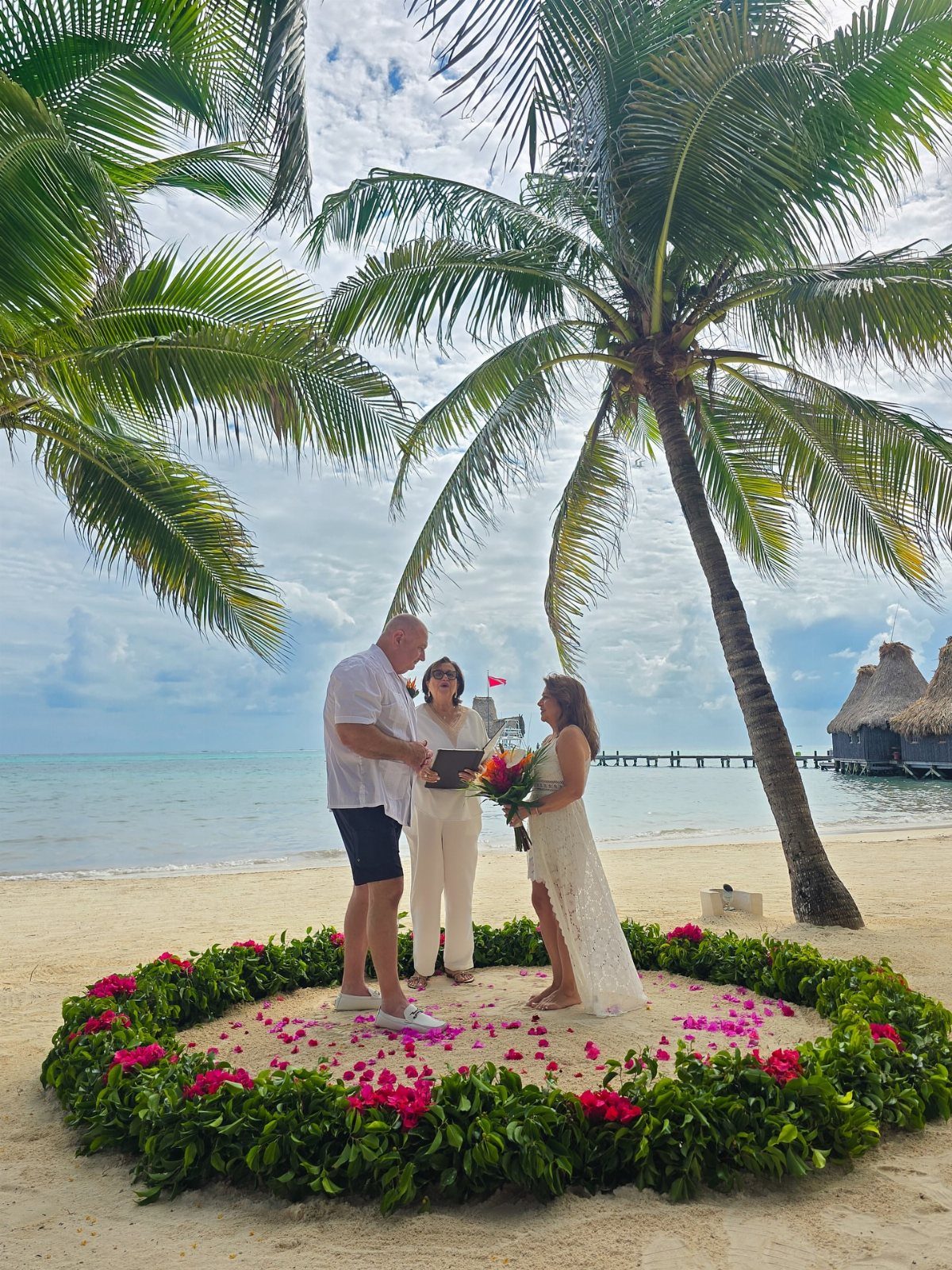
A ring of pink flowers on the sand marks the ceremony space without any tent, aisle or seating.
That is the appeal of a beach: the setting supplies the scenery, and you only need a floral circle and white outfits that suit the palm trees behind you.
Travel costs are the real trade-off, so a small guest list helps. If a trip isn’t realistic, a nearby shoreline or lakefront can give you the same open-air feel at a fraction of the cost.
4. Formal Attire
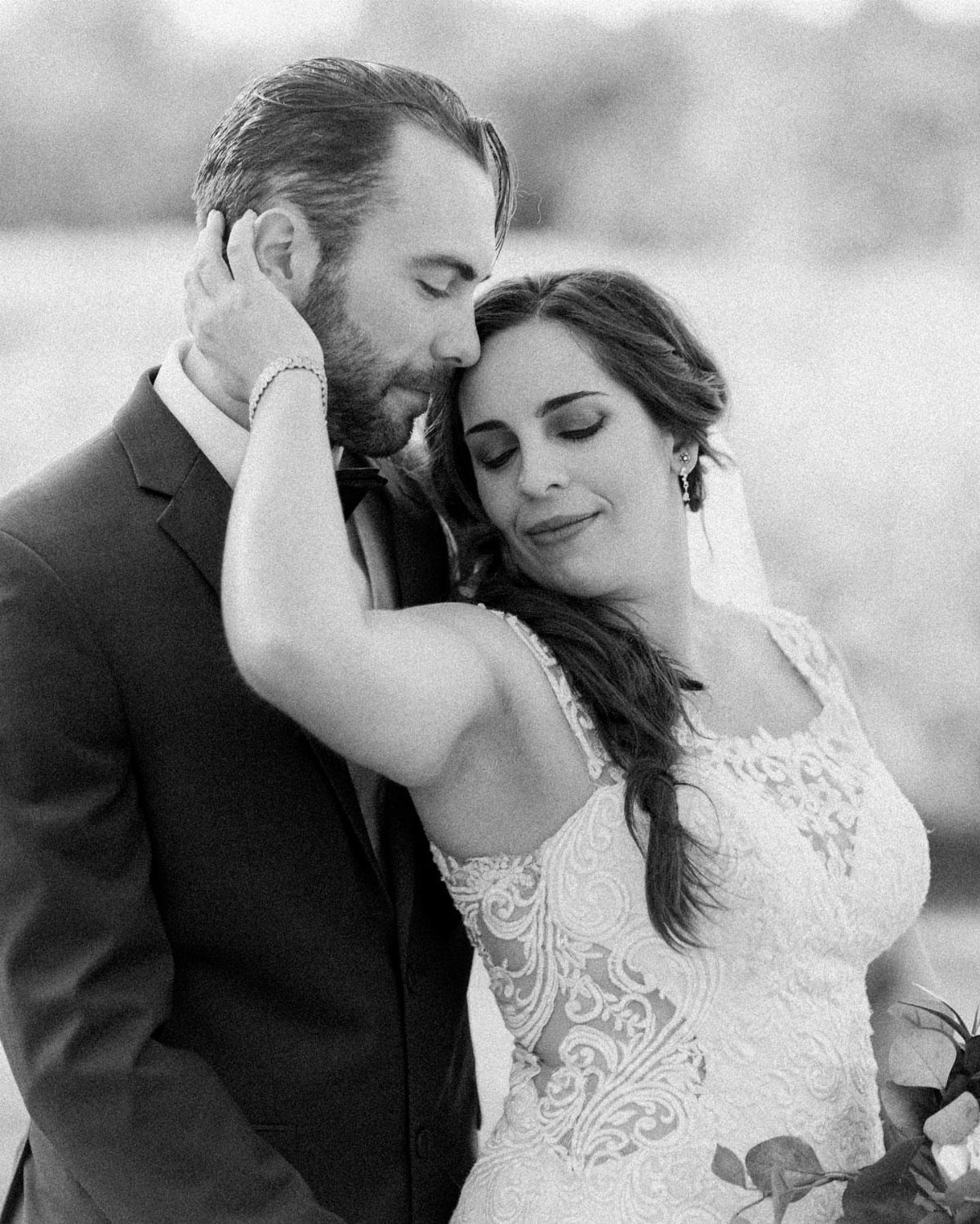
Dressing the way you did the first time, or even dressier, tells everyone this is a real ceremony and not just a party.
A lace wedding gown and a suit photograph beautifully, and black and white film-style edits suit that level of formality.
If your original dress no longer fits, I’d choose a new white or ivory dress instead of altering it heavily. Have the suit pressed and tailored, and book portraits right after you dress, while everything still looks fresh.
5. Photo Displays
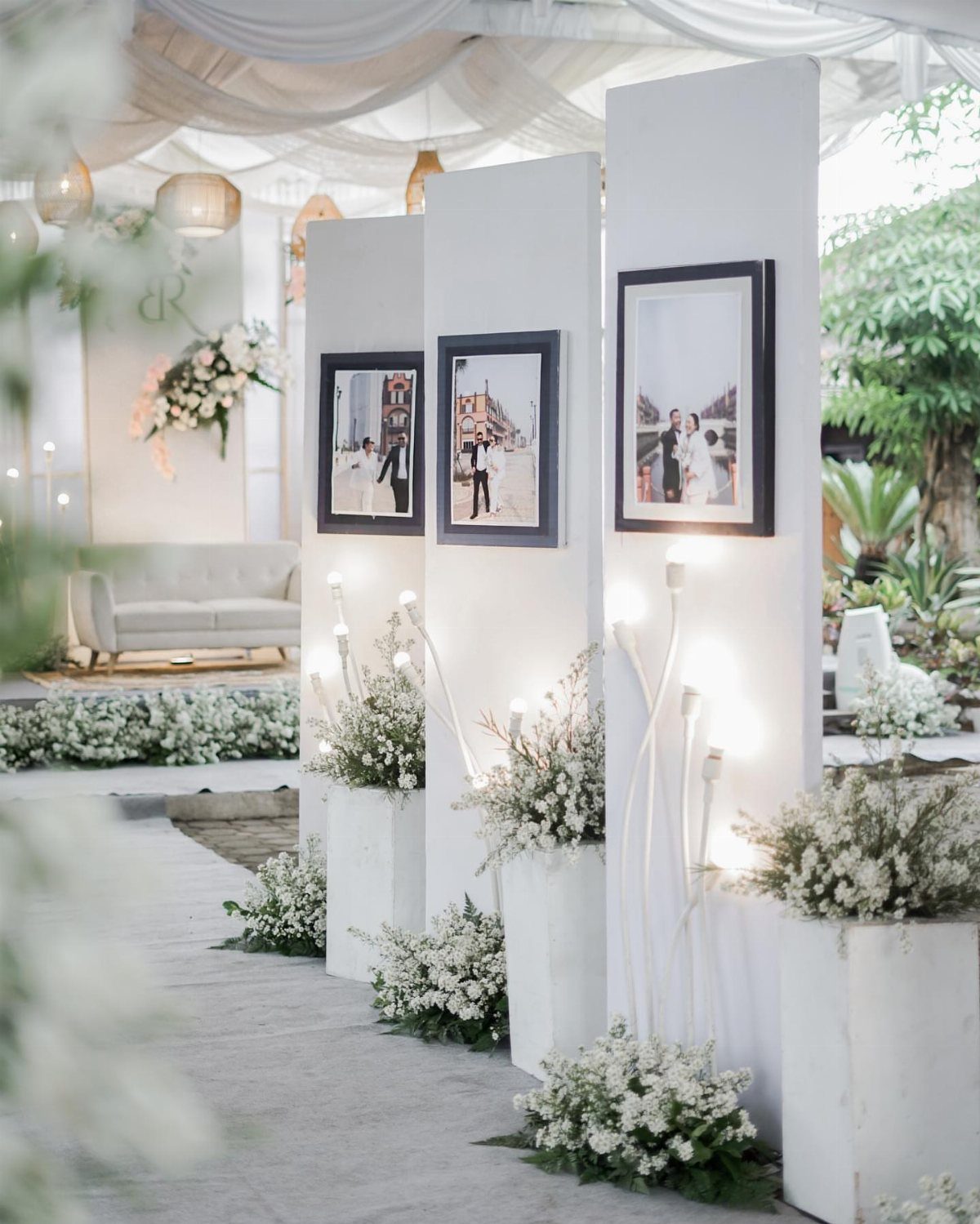
Framed photos from your wedding and the years since turn the space into a visual timeline guests can wander through.
Three tall white panels hold a lot of frames, and baby’s breath in white planters at the base softens the edges for little money.
Keep frames in one color so the mix of old and new photos looks planned. I’d put the display near the entrance, where guests linger while the ceremony space fills.
6. Second I Do Welcome Sign
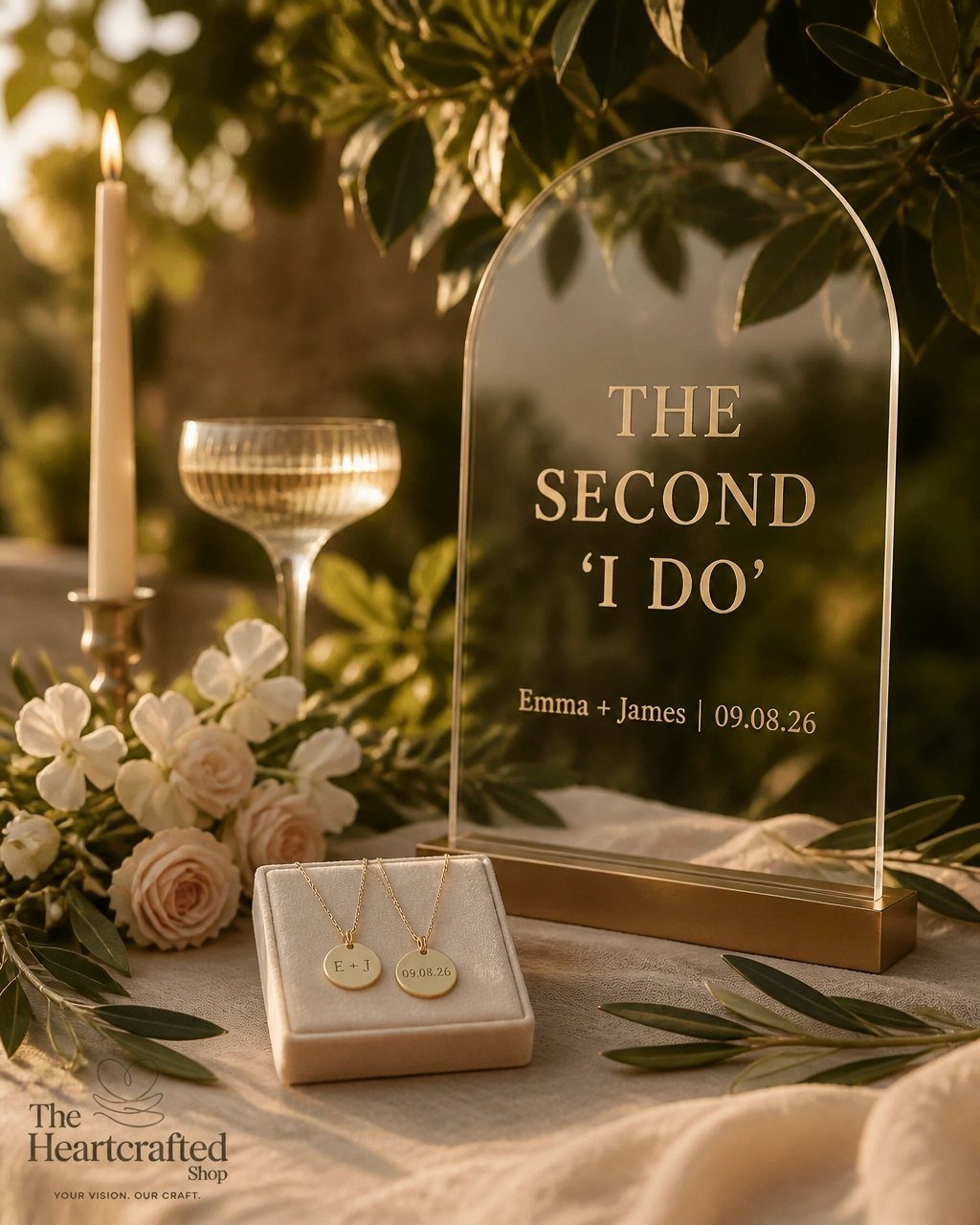
An arched acrylic sign reading "The Second ‘I Do’" with your names and date is the easiest way to mark the occasion at the entrance.
Set it on a table with flowers, a candle, a champagne glass and your jewelry, and the table styles itself.
Order the sign early, since custom lettering takes time to produce and any spelling or date error is hard to fix. I like it best on a simple table with white flowers, so the sign stays the focus.
7. Scenic Hillside Ceremony Arch
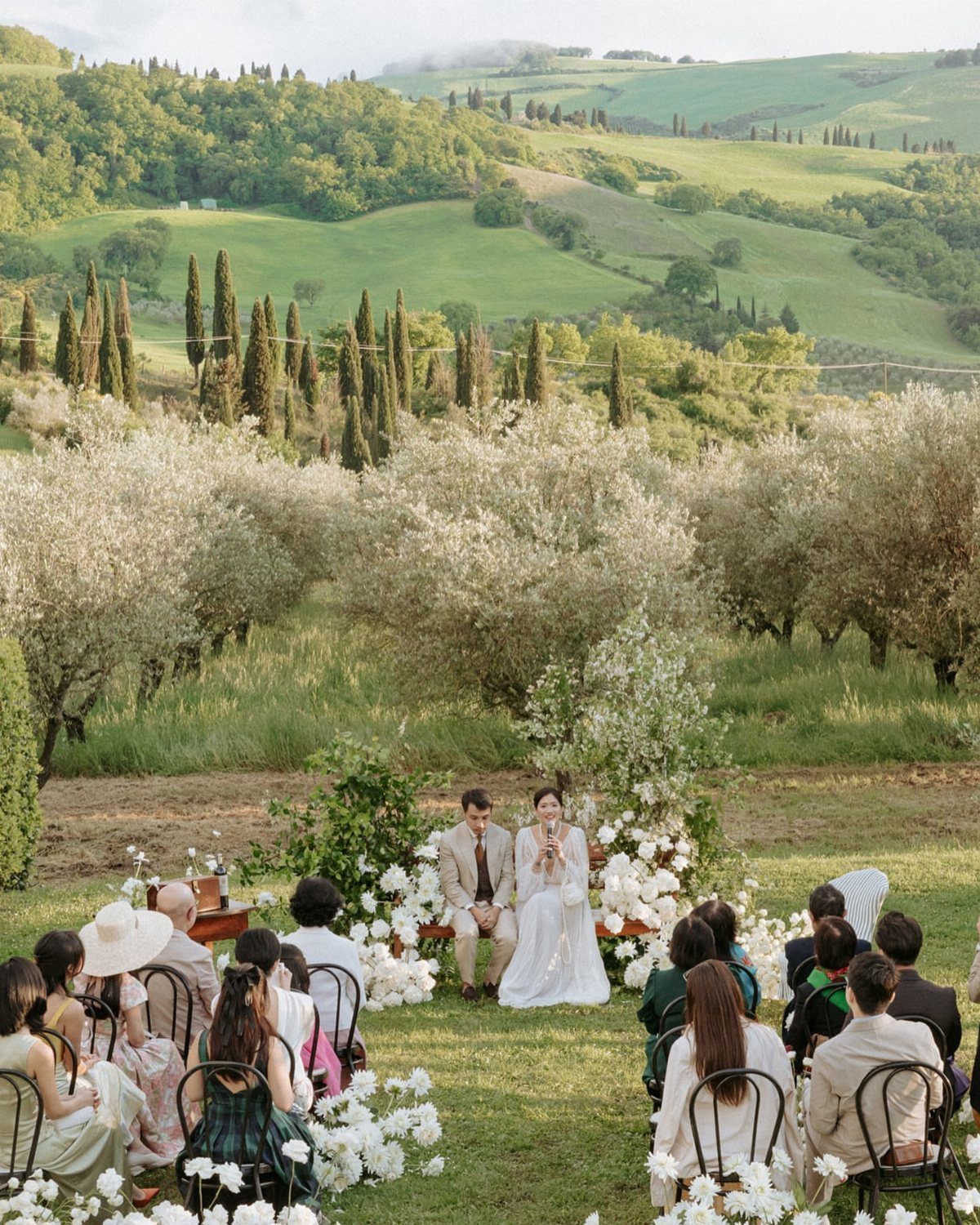
A white floral arch on open grass, with rolling hills and cypress trees behind it, frames the vows so well that you barely need other decor.
The landscape does the work; the arch gives the two of you a spot to stand and the photographer a clear focal point.
I’d keep the flowers all white so the green hills stay the main color.
Seat guests in a loose arc facing the view, and expect to arrange the florals close to the ceremony, since the arch is the one piece everyone will look at.
8. Reading Personal Vows
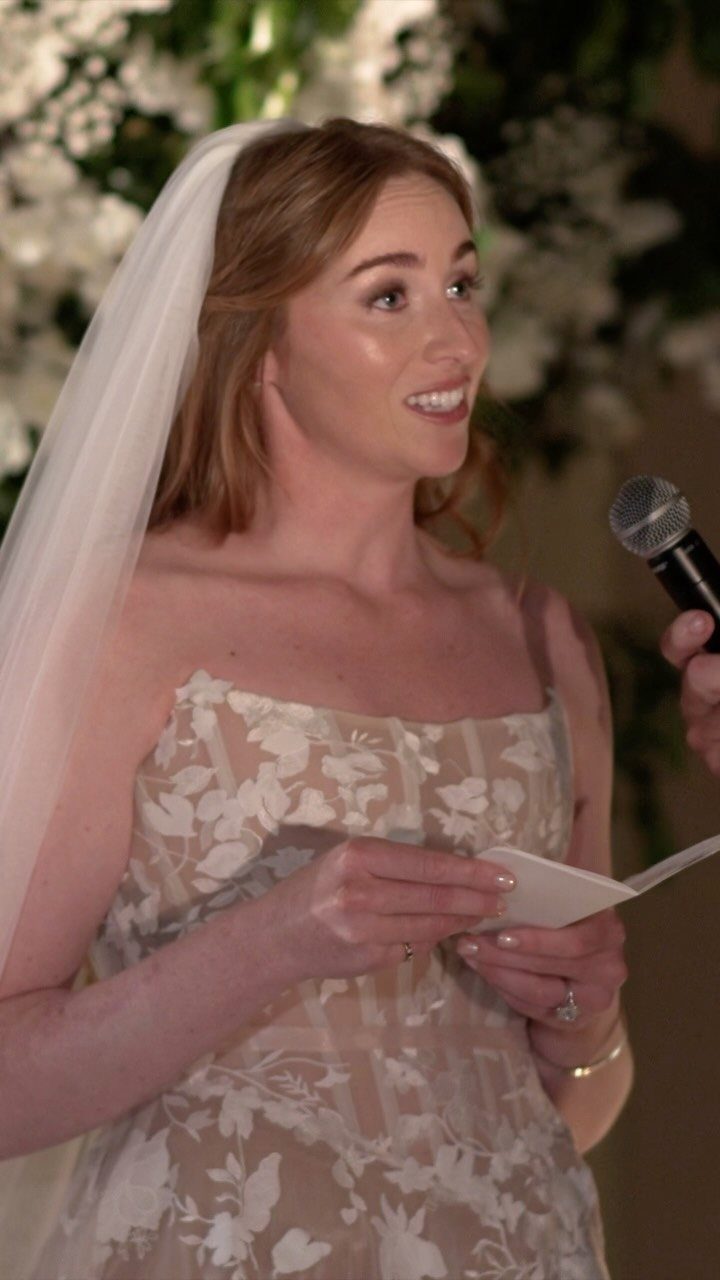
Reading vows you wrote yourself, from notes in your hand, is the part of a renewal guests remember longest.
A microphone helps when the ceremony is outdoors or the room is large, so the words reach the back row instead of just the front.
Write them on a single sheet or card, and print them in a large font so you can read without squinting.
I’d say them aloud a few times beforehand, and keep each set short enough that you can look up at your spouse partway through.
9. Dramatic Candlelit Reception Tables
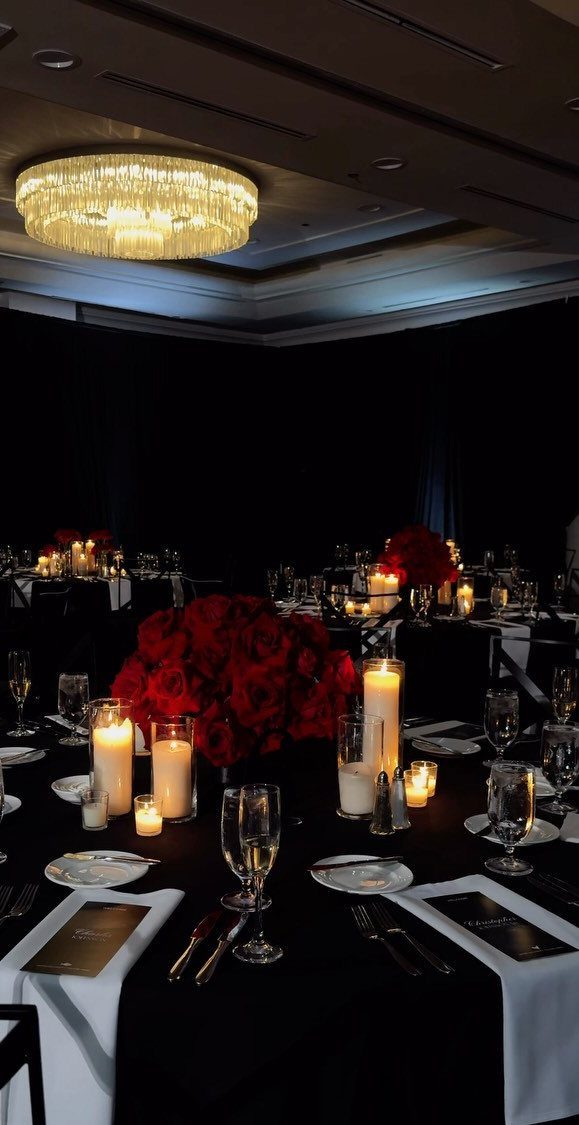
Black linens make a table feel formal, and pillar candles in glass cylinders give it a glow that overhead lighting can’t.
Red roses in the center add the one strong color, so the setting reads dramatic without much else on the table.
Glass cylinders keep the flames steady and protected, which I prefer to bare candles near guests’ sleeves. Store-bought pillars and a single rose arrangement per table keep the per-table cost manageable, and a dim room does the rest.
Reasons to Renew Vows
Three reasons come up again and again, and knowing which one is yours shapes every later choice.
Gratitude is the first. Married life isn’t easy, and a renewal lets you thank each other for the storms you got through and look ahead with some optimism.
The second is a do-over.
If the first wedding was an elopement or a courthouse visit, a renewal gives you the full version, with the processional, the white cake and the people who weren’t there the first time, including children and grandchildren.
The third is a milestone.
Multiples of 5 are the usual trigger, and 10, 25 and 50 years are common picks. Any year that matters to the two of you counts, though.
Settle on your reason before you plan anything else. Build the guest list and the vows around it.
There may be a time when you want to come to church and renew your vows. You can have this kind of service even if you weren’t originally married in church.
Planning Considerations
Start about 12 months out. The first 4 decisions to make, in order, are the date, the budget, the guest list and the venue.
Budget comes before venue because it limits everything after it.
A renewal has no set price. A vow renewal can run from a backyard afternoon that costs next to nothing to a full destination weekend, so settle on your budget figure before you look at a single venue.
Next, choose one or two things to spend on and protect those lines.
If photos matter most, put money there. If food matters most, put it toward catering.
After that, book a celebrant who fits what you have in mind. After that, line up the vendors you’ll want, such as a photographer, florist, band or DJ, and caterer, and cross off any the venue already includes.
If relatives can’t travel, plan a live stream early. Adding it late is harder than building it into the budget from the start.
Vow Writing Tips
When you first said your vows, you were promising things for a life you hadn’t lived yet. This time you can write from experience, and that is the advantage to use.
Keep a journal for the months before the ceremony.
Keep a running note on your phone for a few weeks: every time you feel thankful for your spouse, or something they do reminds you why you fell for them, write it down. Those notes become your raw material.
A few things to put in the vows:
- One hard stretch your marriage came through, and how the two of you got to the other side
- Something about your partner you’re grateful for
- Promises you can really keep, in your own words rather than stock phrases
Cut anything that could be read at any couple’s ceremony. The specific details are what make the vows yours.
Frequently Asked Questions
What is a vow renewal?
Married couples hold a vow renewal to say their promises to each other again, with no new legal step involved.
It usually looks like a wedding, with dressing up, guests and sometimes cake, but it isn’t legally binding, so you can make it as formal or as casual as you like.
What year do most couples renew their vows?
Milestone anniversaries are the most popular, especially 10, 25 and 50 years, though 20 and 30 come up too. If you want a full wedding-style event, start planning about 12 months ahead.
What do you say when renewing wedding vows?
Good renewal vows look back before they look ahead: mention one rough patch you got through together, thank your spouse for something specific, and promise only what you will actually do.
A running phone note of moments you felt thankful, kept for a few weeks beforehand, gives you the raw material.
Do you need an officiant for a vow renewal?
No. A renewal isn’t a legal ceremony, so no licensed officiant or paperwork is required.
Nobody with legal authority is required, so a close friend, a relative or a clergy member can lead the ceremony, and some couples skip a leader and speak their vows to each other.
If you want a custom script and help running the day, hiring a celebrant who fits your plans is worth it.