Guest ages should pick your games from these 12: Giant Jenga, Giant Connect Four and the Foam Stepping Stones suit a mixed crowd, a Slip ‘N Slide or Blindfolded Tag belongs to kids who can run, and Cup Tic-Tac-Toe works best for older kids and teens.
The range is wide, from sack races that need only a stack of black trash bags to oversized lawn games and a Lawn Plinko Prize Drop you can buy ready-made or build.
A big lawn gives running games like tag and sack races room to work, while a small patio suits tabletop picks like cup tic-tac-toe.
1. Giant Jenga
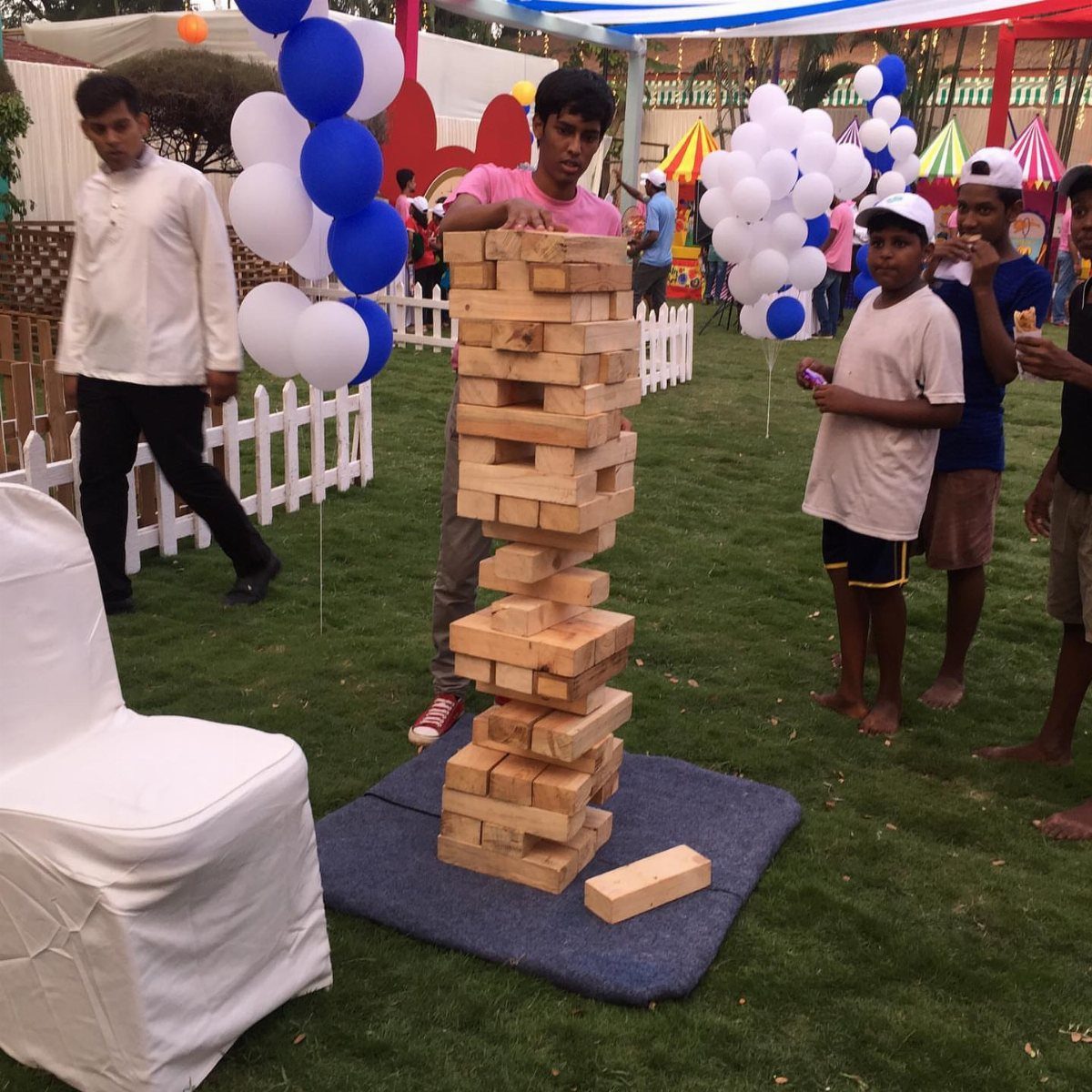
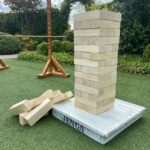
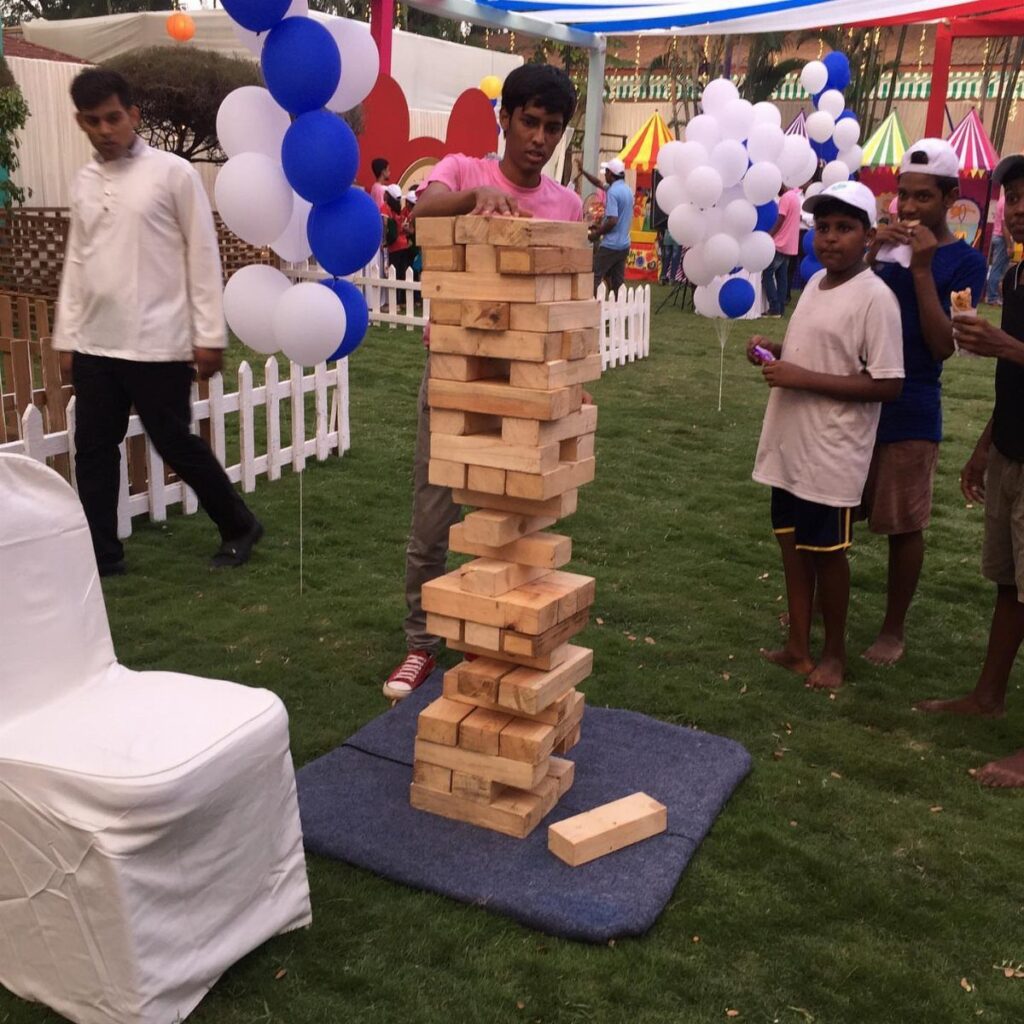
Stacked on grass, oversized Jenga blocks turn a quiet lawn game into a loud one, because every pulled block now takes two hands and a bit of nerve.
Kids can play in teams of 2 or 3 so nobody waits long for a turn.
Set the tower on the flattest patch of lawn you have; a slope makes it fall before anyone has played. Agree on one rule up front, such as one hand per pull, and the arguments stay short.
2. Slip ‘N Slide
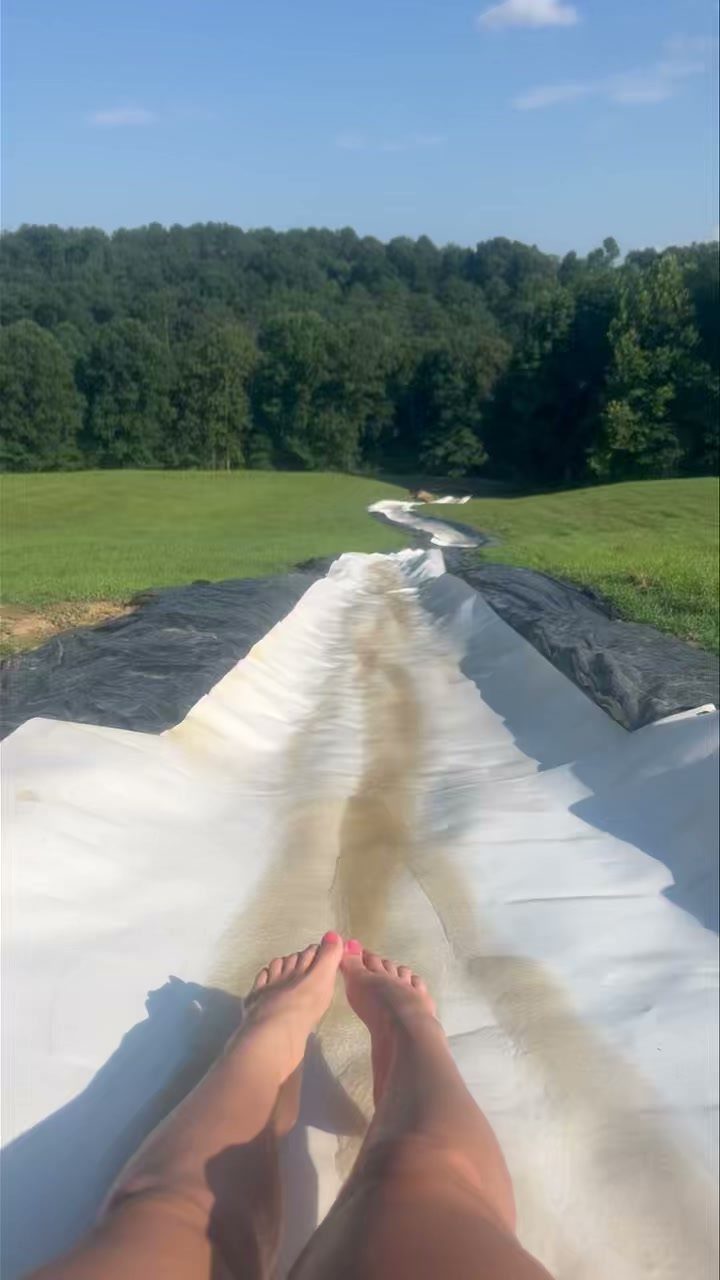
A long white plastic slide on a grassy hill gives kids a reason to run the whole length of the yard, then climb back and do it again.
Choose the gentlest slope you have, and keep the runout clear of anything hard at the bottom. Hose the plastic until it’s slick before the first turn, and hose it again whenever it starts to drag.
Keep towels in a stack by the end of the slide. Wet kids will want to be wherever the party is.
3. Giant Connect Four
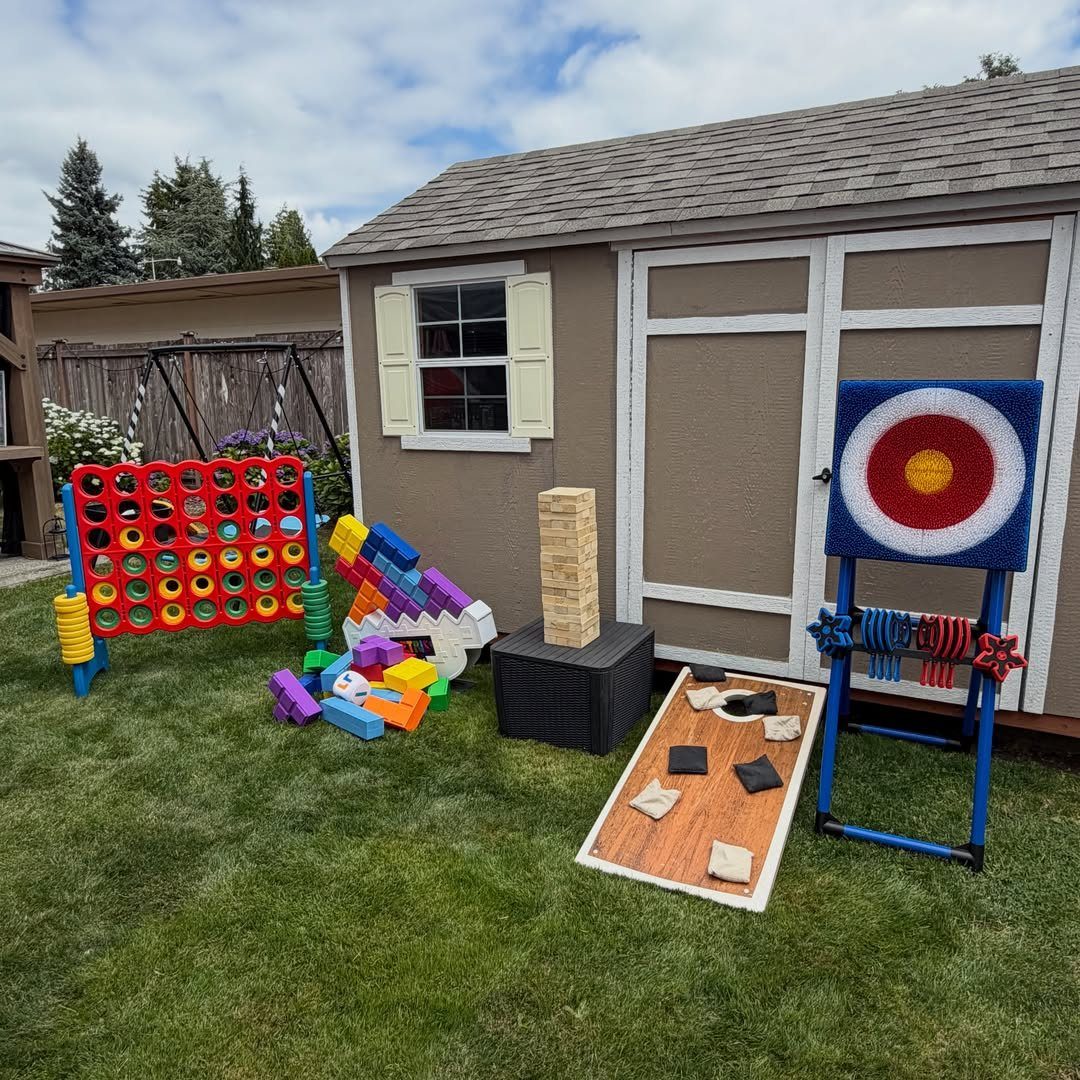
Four in a row works just as well when the discs are the size of saucers, and kids pick up the rules in about a minute.
It’s the easiest oversized game to run without a referee: two players, one winner, and the next pair steps up.
Set it on level ground so the discs don’t roll. If you’re hosting a mix of ages, put it next to a second lawn game, so a pair that finishes quickly has somewhere to wander.
4. Giant Bubbles
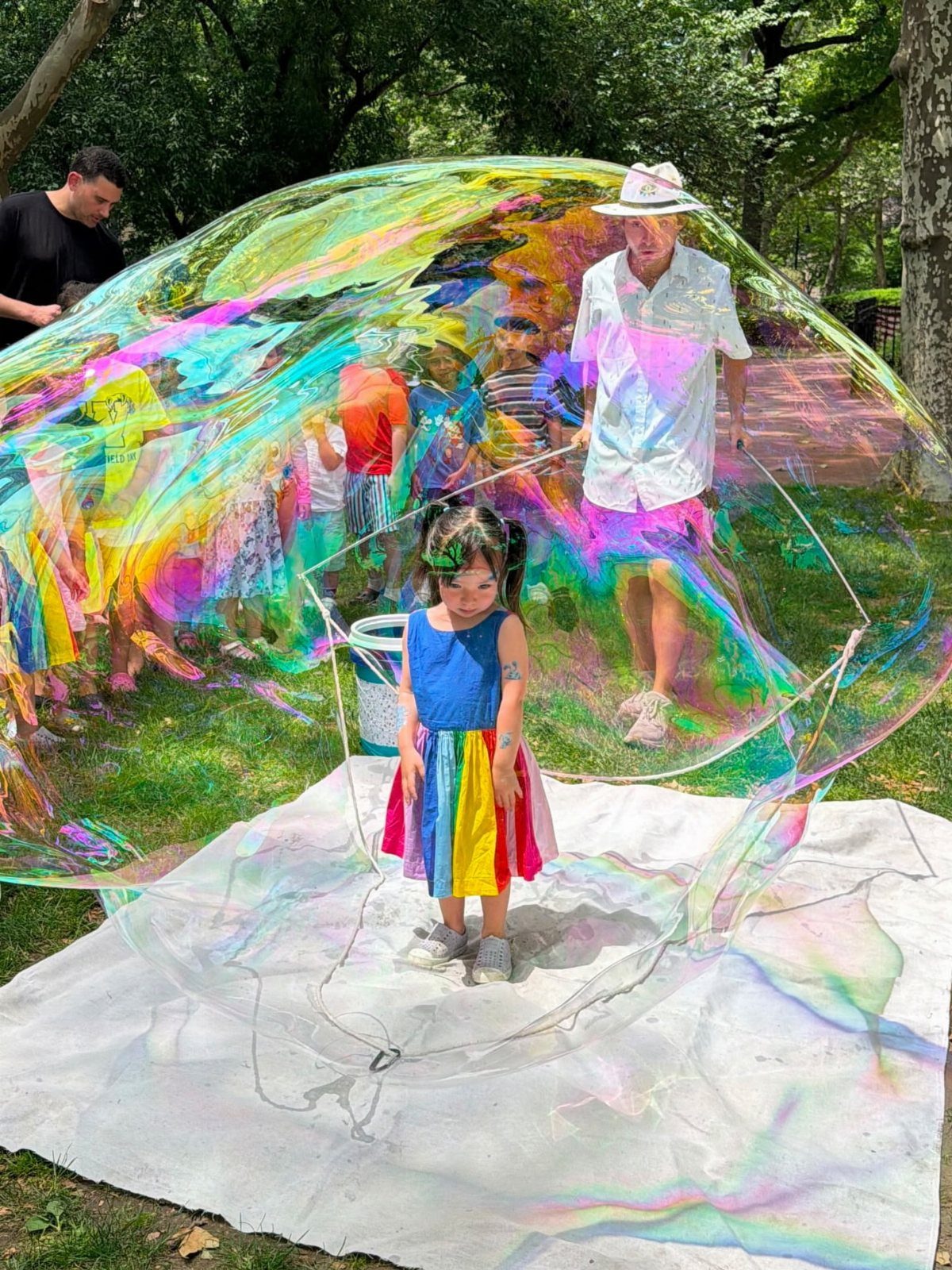
Big bubbles need a wand and a patient adult, and the reward is a bubble wide enough to hold a child standing inside it.
I’d give this job to one grown-up with a large tub of solution, while the kids line up for turns.
Pick a spot with soft grass and a few feet of open space around the bubble, since that’s where kids will crowd in. Expect smaller kids to prefer chasing and popping the bubbles over stepping into one, so let them.
5. Backyard Piñata Game
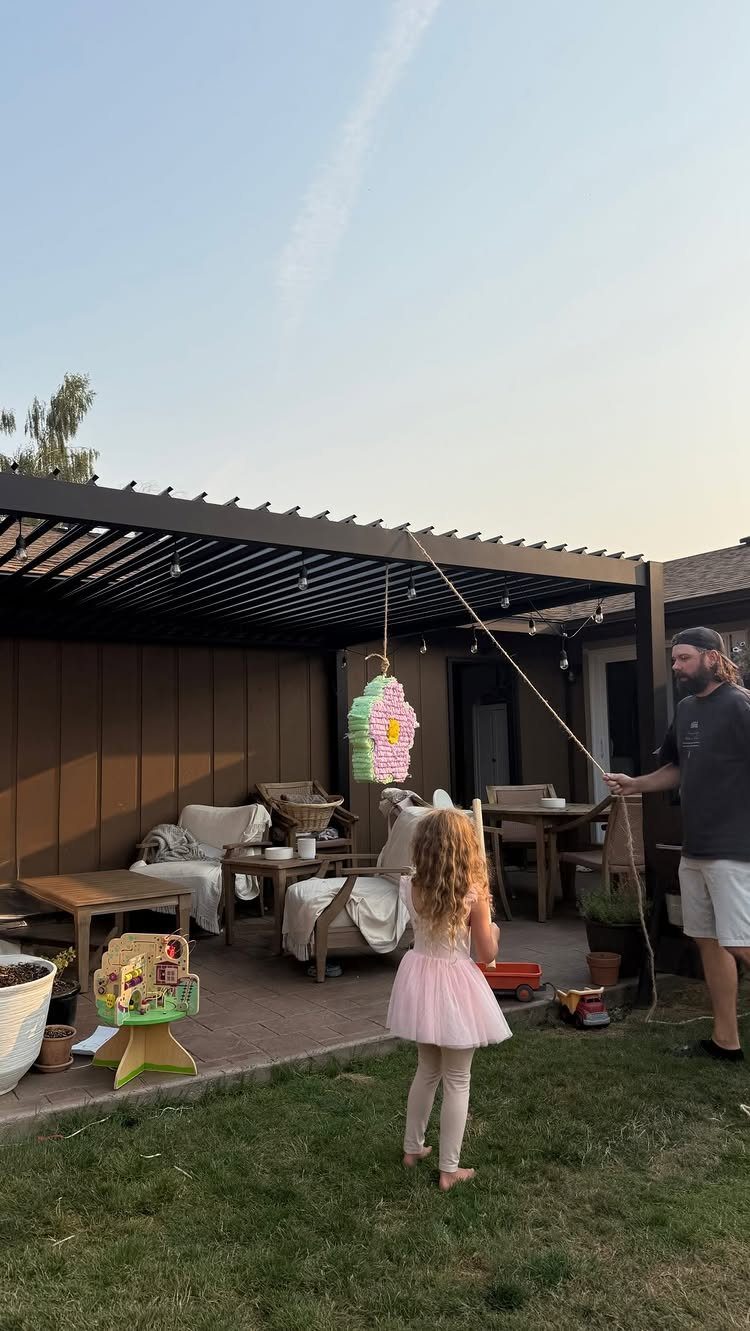
A piñata hung from a pergola beam solves the hardest part of the game: finding something sturdy and high enough to hold it.
Tie the rope off to the beam, then let an adult hold the loose end so you can raise and lower it for different ages.
Have the youngest kids hit it first, with the piñata hanging lower. Mark a line on the grass for everyone else to stand behind, well back from the swinger.
6. Giant Lawn Board Game
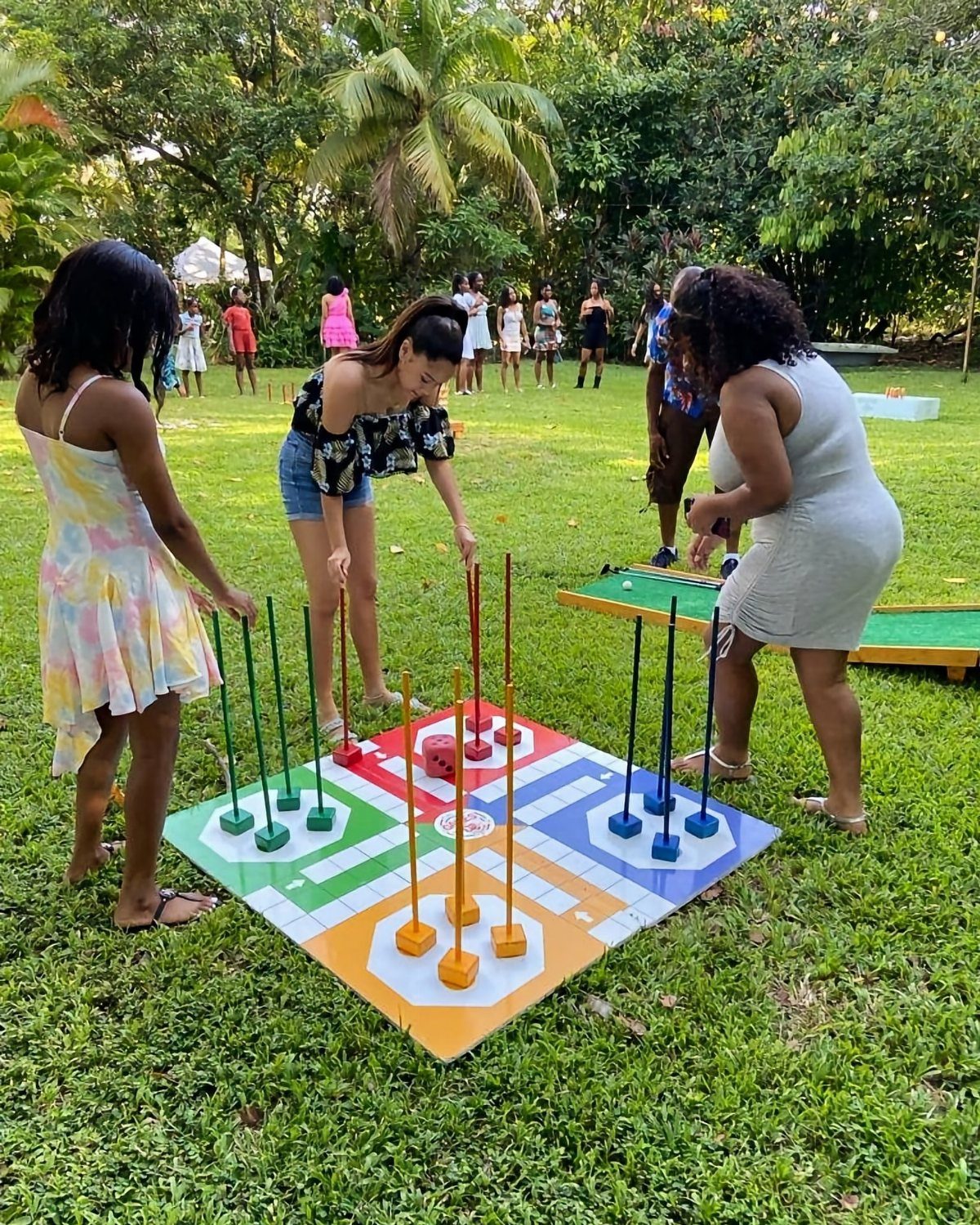
Large colorful pegs and pieces spread across a lawn make a board game that players walk around instead of leaning over.
This suits groups better than a pair, since people can team up and cheer from the sidelines.
Choose a game with simple rules; anything needing a long explanation loses younger kids fast. Lay the board on a flat, mowed patch so pegs stand upright, and keep the instructions handy for the one question that always comes up.
7. Blindfolded Tag Game
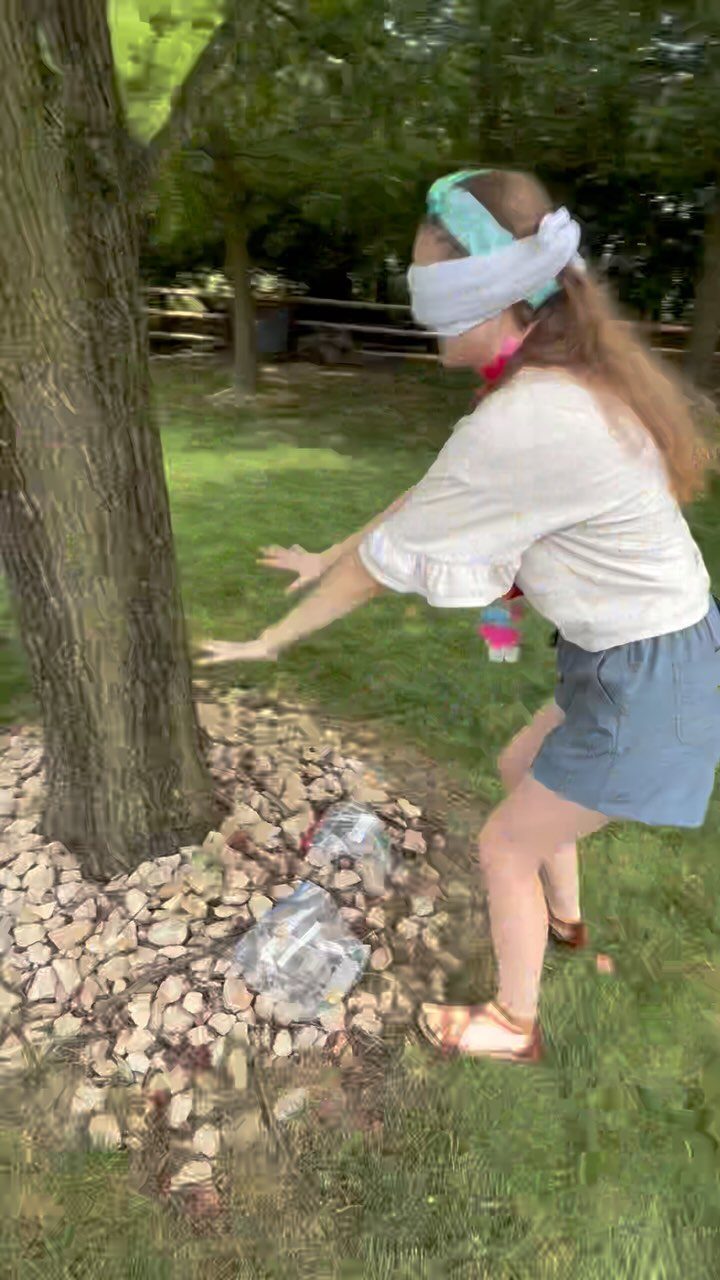
Take away sight and a flat lawn becomes a hard course, so I play this on open, level grass cleared of trunks, rocks and anything else a player could trip on.
Before anyone is blindfolded, walk the yard and move rocks, hoses and toys out of the way.
Keep the play area small and clear, and decide on one boundary the kids can’t cross. I’d pair each blindfolded player with a seeing helper who calls out directions, which turns tag into a team game.
8. Cup Tic-Tac-Toe Game
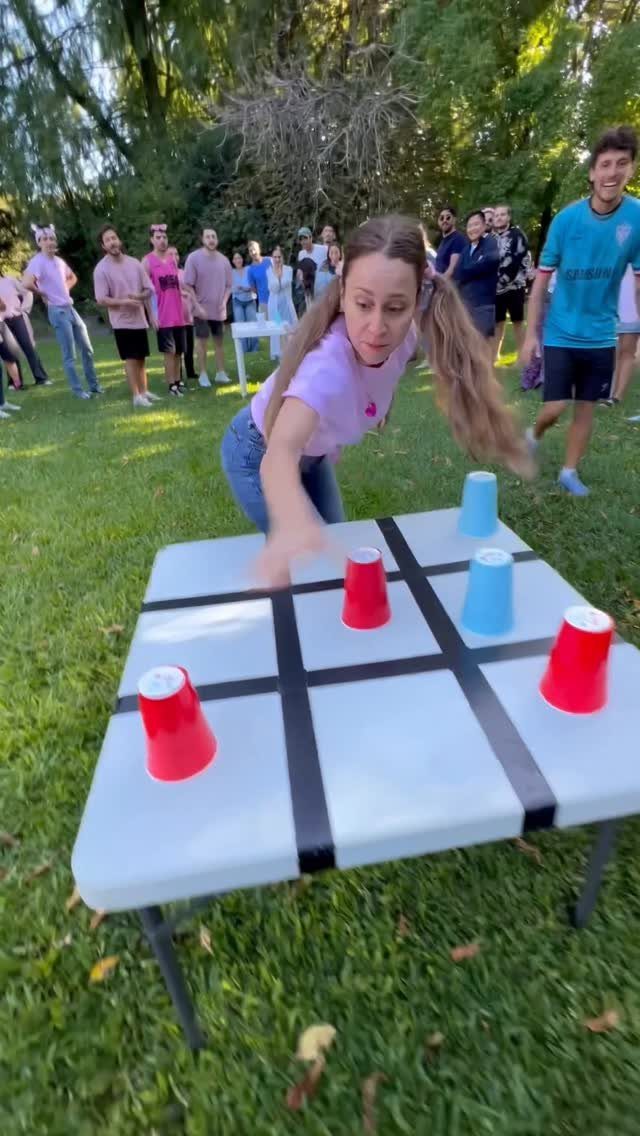
Red cups against blue cups gives a tabletop tic-tac-toe that costs almost nothing and needs no explanation, since everyone already knows the rules.
9 cups set out in a 3×3 grid make the board; each player then takes turns placing a cup from their own color into a square.
A white table keeps the colors easy to read. Older kids and teens will take it more seriously than little ones, so I’d keep it as a side table game for the bigger crowd.
9. Sack Race Game
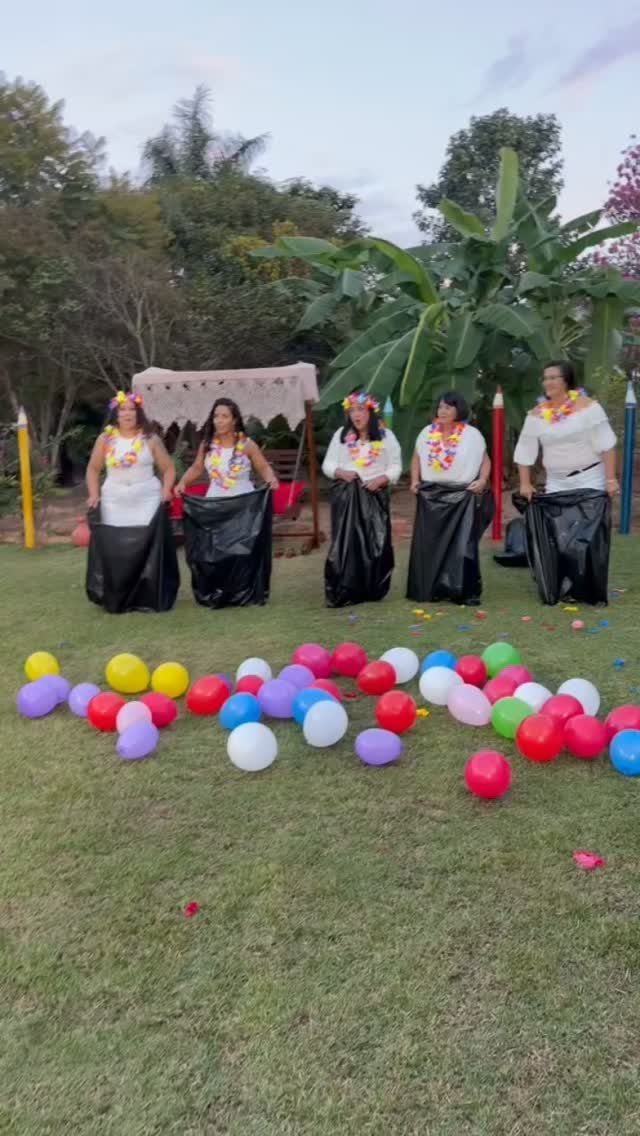
Black trash bags work fine as sacks: cheap, big enough to step into, and easy to buy on the way home.
Check each bag for holes first, and use a fresh one per racer.
Mark a start and a finish line on the grass, and keep races to short heats so a bag doesn’t tear mid-hop. Mowed lawn is best; bumpy ground makes falls more likely than laughs.
10. Elastic Band Jump Rope Game

Two taut elastic bands held at ankle height are all this game needs, which makes it one of the lightest things to pack for a party.
The holders can raise the bands as rounds go on, so the game scales for any age.
I’d rotate the holders every few turns so nobody gets stuck. Choose soft, mowed grass for landings, and keep the bands clear of faces.
11. Foam Stepping Stones Game
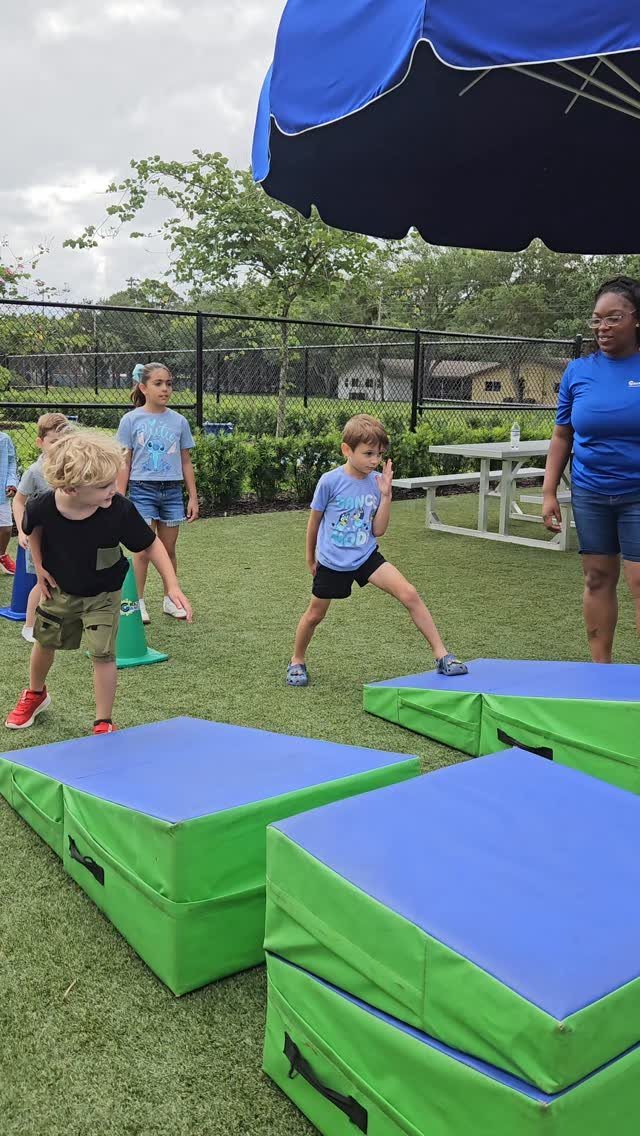
Foam pads laid out like a path turn a stretch of lawn into a river that kids hop, wobble and balance across.
Space the pads close for younger kids and farther apart for older ones. Place them on flat ground so they don’t slide, and keep one adult near the end of the path.
Blue and green pads read like water and rocks, so a simple story, such as crossing without falling in, gets kids playing at once.
12. Lawn Plinko Prize Drop
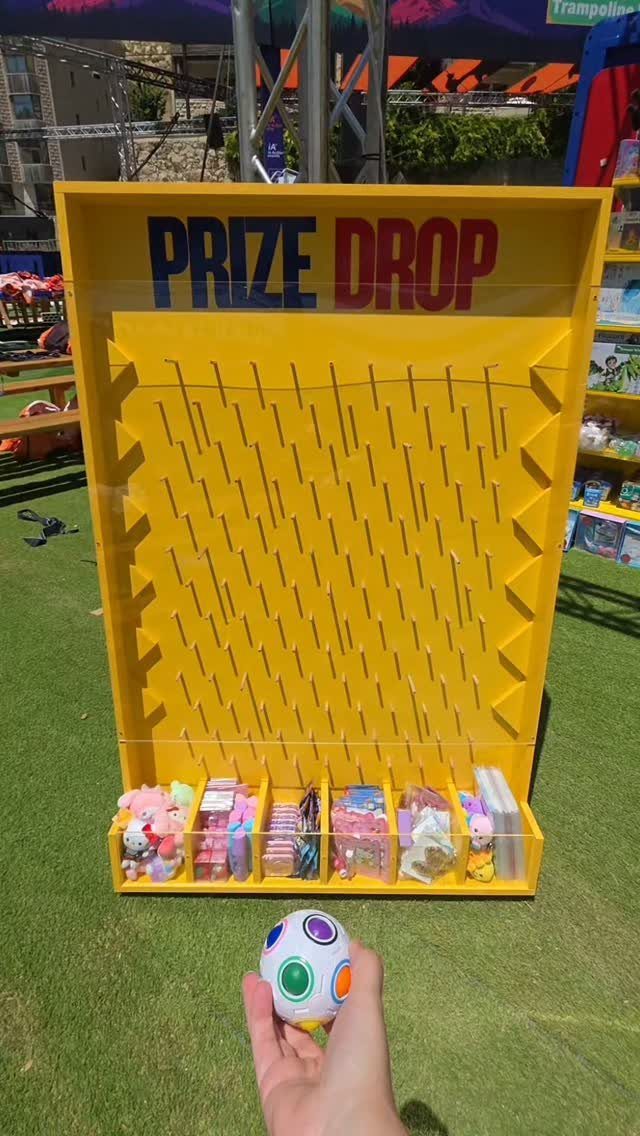
A peg-board tilted upright on the lawn lets a ball bounce its way down to whichever bin it lands in, and that bit of chance keeps kids lining up.
Fill the bins with small toys so every drop wins something. Let each child take one turn per round, so the line moves.
Stand the board on level ground and weigh it down if the breeze picks up. Buy a ready-made board, or build one if you’re handy; the toys cost more than the board.
Planning Outdoor Games
Start with the age range on the guest list, because a game that suits the older kids will lose the youngest ones almost at once.
If the ages are mixed, plan one calm option and one running option so nobody is stuck watching.
Gather every supply into one bin or box the day before, and test anything that inflates, stacks or squirts.
A missing piece found at party time leaves a yard full of guests standing around while you hunt through the garage, so gather every prop the day before.
Explain each game in two or three sentences, once, before it starts. Say what counts as winning and what ends a turn, and keep the rules short enough that a kid can repeat them back to you.
Plan the order, too. Put a high-energy game first, a quieter one after it, and leave a few minutes between games for water and a bathroom trip.
Safety Tips for Outdoor Parties
Look at your space before you pick anything. A large open lawn handles running games, while a smaller patio suits table games and oversized versions of classics.
Look for shade before the day arrives, particularly if the games run through the middle of the afternoon. A pop-up canopy or a spot under a tree gives kids somewhere to cool off.
Have a weather backup ready: a covered patio, the garage, or a few prepared activities you can move indoors fast.
If the yard sits near a street or another unsafe spot, set clear boundaries and say them out loud before play starts. Keep a first-aid kit where you can reach it quickly.
When parents arrive, remind them to apply sunscreen, and keep water out where kids can see it. Hot days call for frequent water breaks.
Benefits of Outdoor Parties
Outdoor space lets kids run, jump and shout without bumping into furniture or bothering the neighbors. That freedom builds gross motor skills, and it burns off energy better than a living room can.
Group games also give kids practice at teamwork, taking turns and settling small disputes. Quieter kids often find it easier to join in when the setting is relaxed and nobody is watching them closely.
Outside, kids make up their own rules and roles without being asked, so leave gaps between the planned games and let them run. Let them run with whatever they come up with.
As the host, I find the appeal is mostly practical. Spills and stains matter less on grass or pavement, so less cleanup follows you indoors, and you get to enjoy the party instead of guarding the carpet.
Frequently Asked Questions
What are some fun outdoor games to play in the summer?
Water games suit summer best.
For summer, my first pick is a Slip ‘N Slide set on the mildest slope in the yard: soak the plastic with the hose until it’s slick, and park a stack of towels at the finish.
Sprinkler limbo and water balloon toss also work, with partners stepping farther apart after each catch, and giant Jenga or giant Connect 4 give kids something calmer once they’ve dried off.
What are some good games for a park party?
Capture the flag, frisbee and giant Jenga all travel well to a park. Giant Jenga works best on the flattest patch of grass you can find, since a slope will topple the tower before anyone plays.
Pairs or trios keep each turn short, and a single agreed rule, like one hand per pull, settles most disputes before they start.
What are some creative ideas for a kids’ garden party?
Oversized classics are the easiest to pull off: giant Connect Four, giant Jenga and a lawn board game with simple rules.
For something less expected, lay foam pads as a river path and let kids hop across without falling in, or hang a piñata from a pergola beam.
Plan one calm game and one running game if the ages are mixed, so nobody ends up watching.