Where you play decides which of these family fun games fits: a backyard lawn takes the water balloon fight, while a coffee table, kitchen counter or living room floor suits the rest.
The span is wide on effort, from a cardboard box out of the recycling pile to a trivia game that needs a TV and a console.
Ages matter too, and most of these hold up from about age 6 to adult, so pick the space first and the players second.
1. Water Balloon Fight
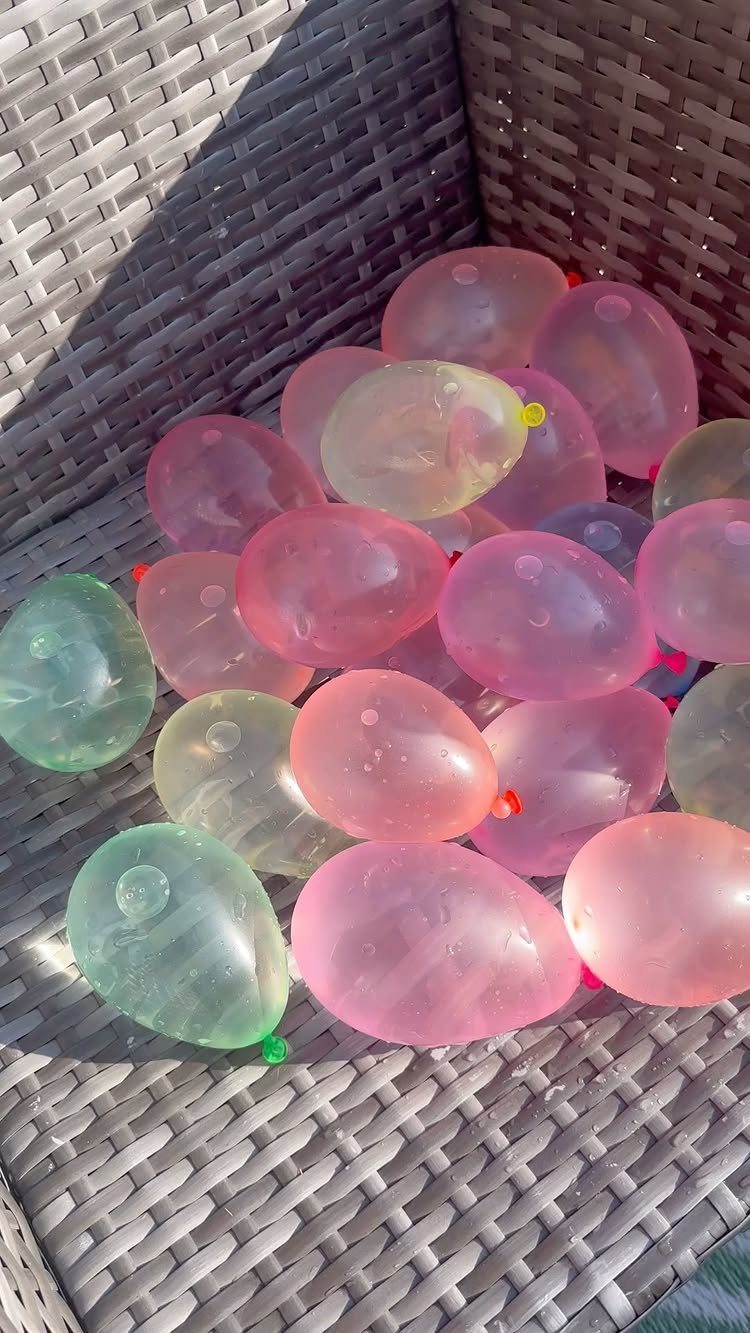
2 equal piles of water balloons make the whole game fair before anyone throws a thing. Fill them, count them, and split them evenly into 2 teams’ worth so nobody ends up with a thinner arsenal.
Keep the filled balloons in a wicker basket or a shallow laundry tub, since a lined container stops them from rolling into each other and popping before the game starts.
Park it on the grass, not the driveway, and keep a trash bag nearby for the scraps.
2. Back-to-Back Drawing Game
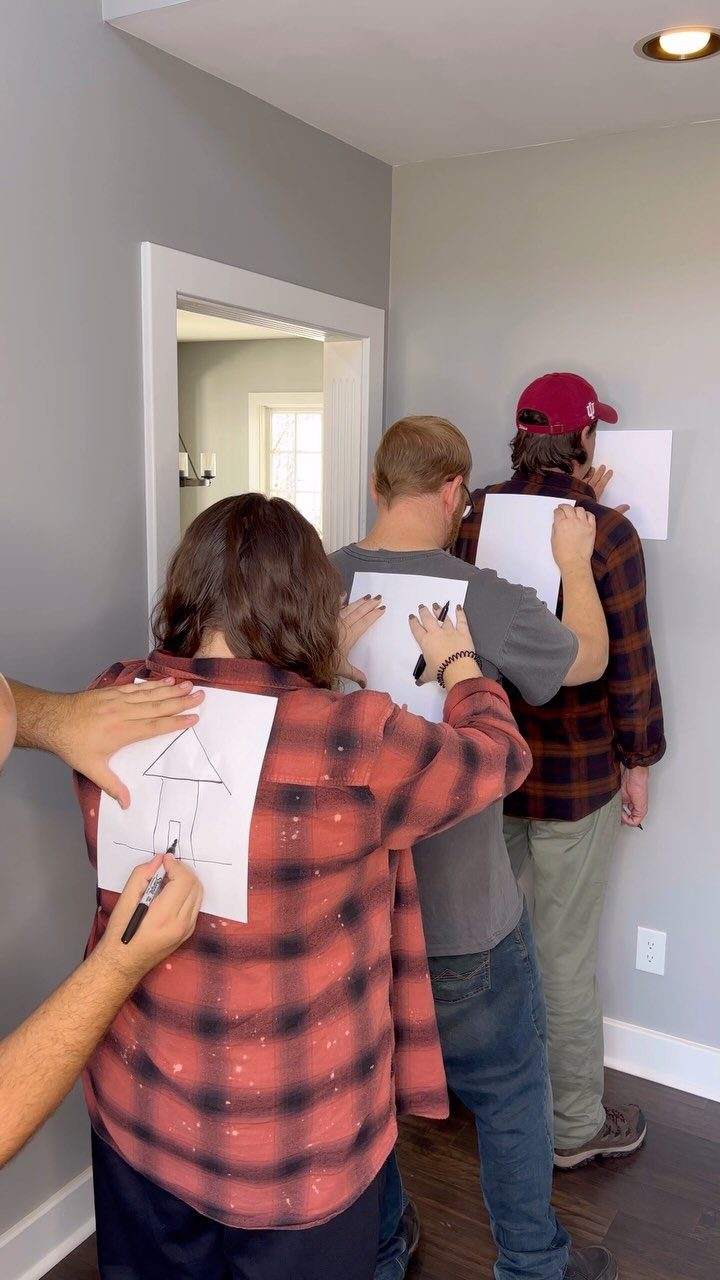
Taping paper to a back turns a line of people into a game of telephone with a pencil. Each player draws on the back of the person ahead, feeling the picture traced onto their own back by the person behind.
Pick a simple shape like a house, since a complicated one falls apart by the third person. Use masking tape so it comes off clothes easily, and let the last person in line show the result to the group.
3. Family Board Game Night
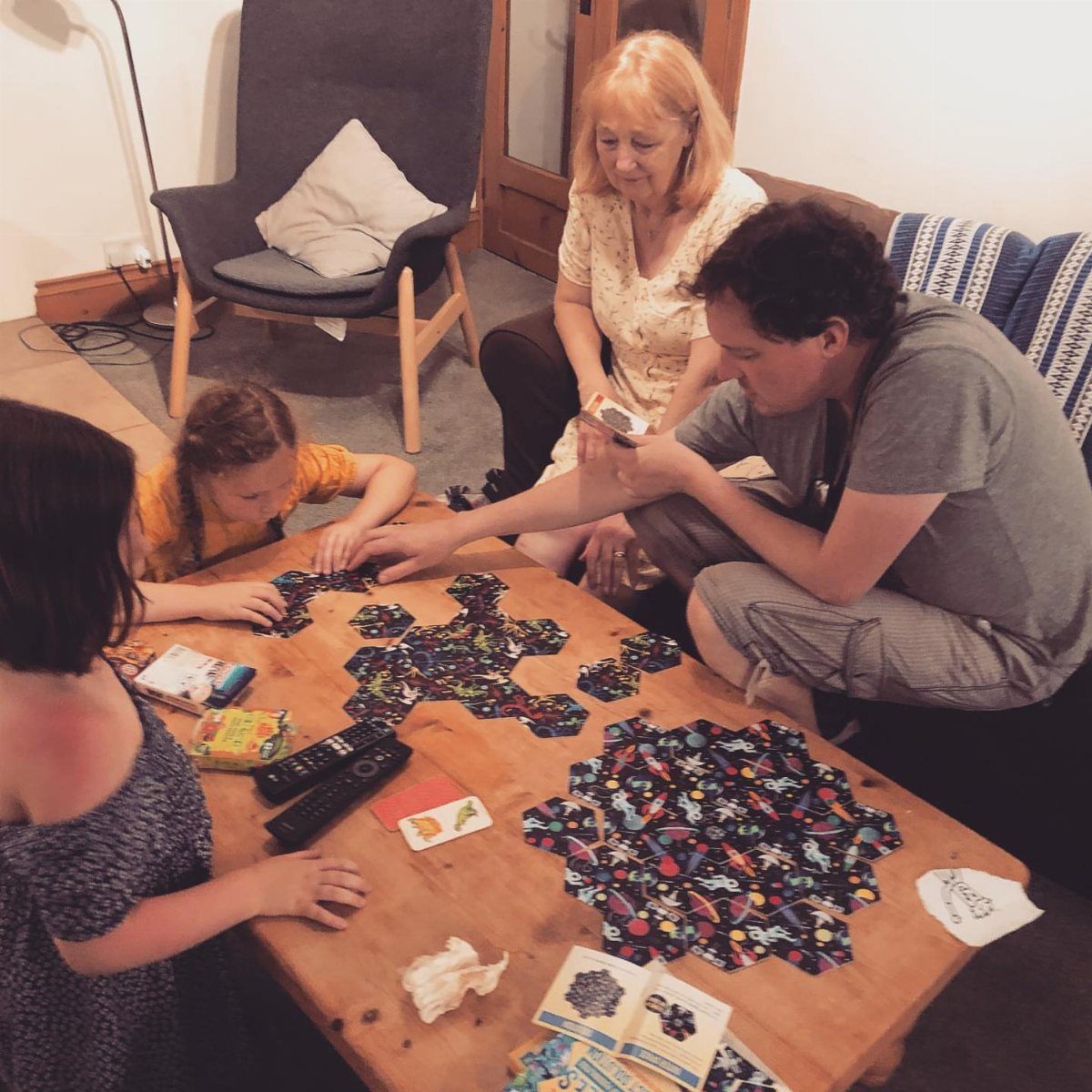
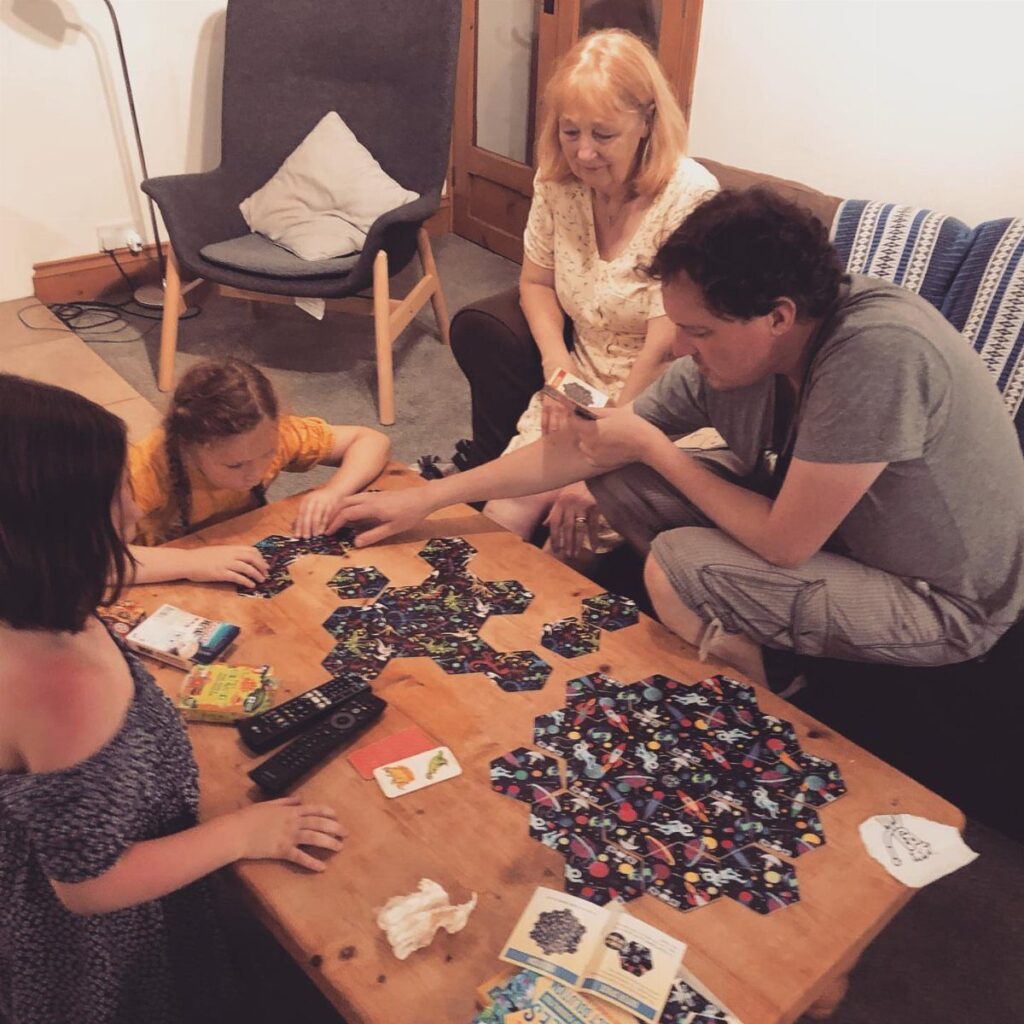
A tile-laying board game works well on a living room coffee table because the pieces stay in a small, easy-to-reach space. Kids and adults can learn it as they go, and the game doesn’t need a big setup.
I’d clear the table of everything except the snacks and put the remote out of reach. Phones off matters more than the game you choose.
4. Plastic Cup Ball Rolling Game
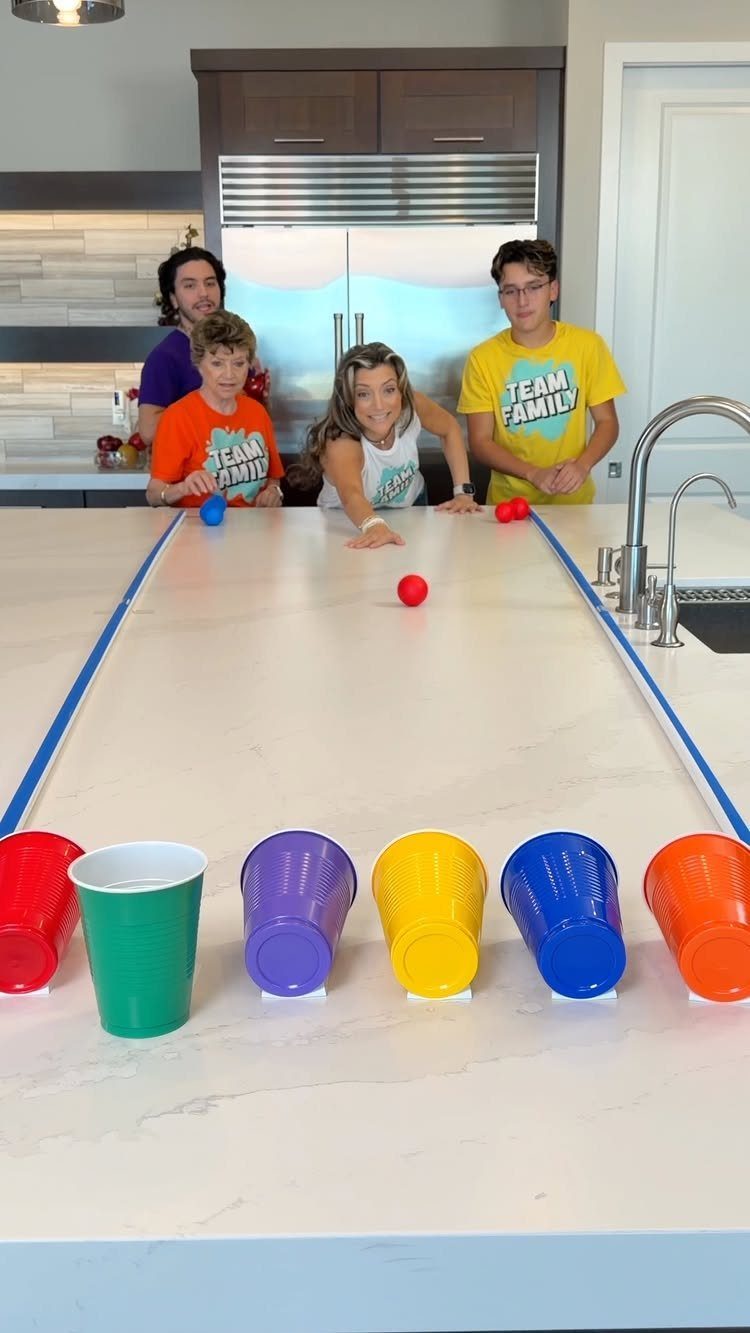
Rolling a ball at a row of plastic cups is a kitchen-counter game that asks for almost nothing. Line up the cups, hand over a few balls, and let each player take a turn.
Matching shirts, even cheap solid-color tees in 2 colors, turn a few rolls into a team contest and make it easy to see who is on which side.
I prefer the counter to the floor, since balls can’t run far and small kids can reach.
5. Colored Floor Tile Stepping Game
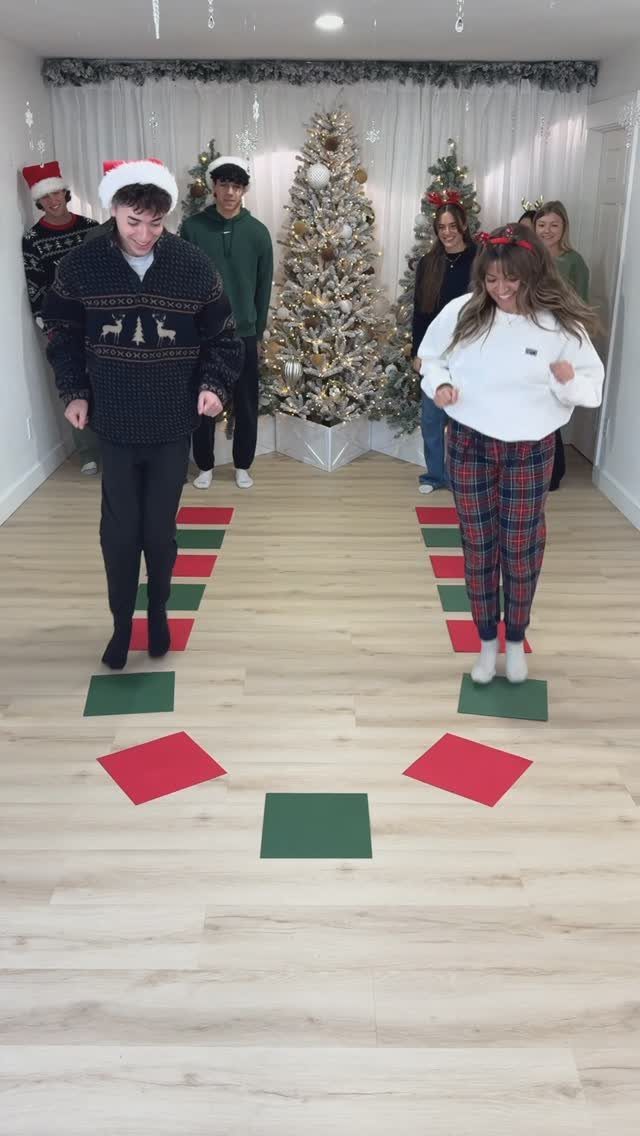
Floor squares in 2 colors turn a living room into a stepping puzzle. Players must land on the right color with each move, and the room itself becomes the game board.
Lay the tiles in a pattern with a clear path and enough space between them for small feet.
Moving the furniture back first saves a lot of stubbed toes, and it works nicely as a party game when you have a crowd.
6. Face the Cookie Game

Balancing a cracker on the forehead and moving it to the mouth using only face muscles is as silly as it sounds. The player lies on their back, which is why grass beats a hard floor.
Use a flat, sturdy cracker that holds its shape, and have a timer ready so people can race. Keep a few spares, since the first attempts tend to end with crumbs in someone’s hair.
7. Paper Strip Cup Race
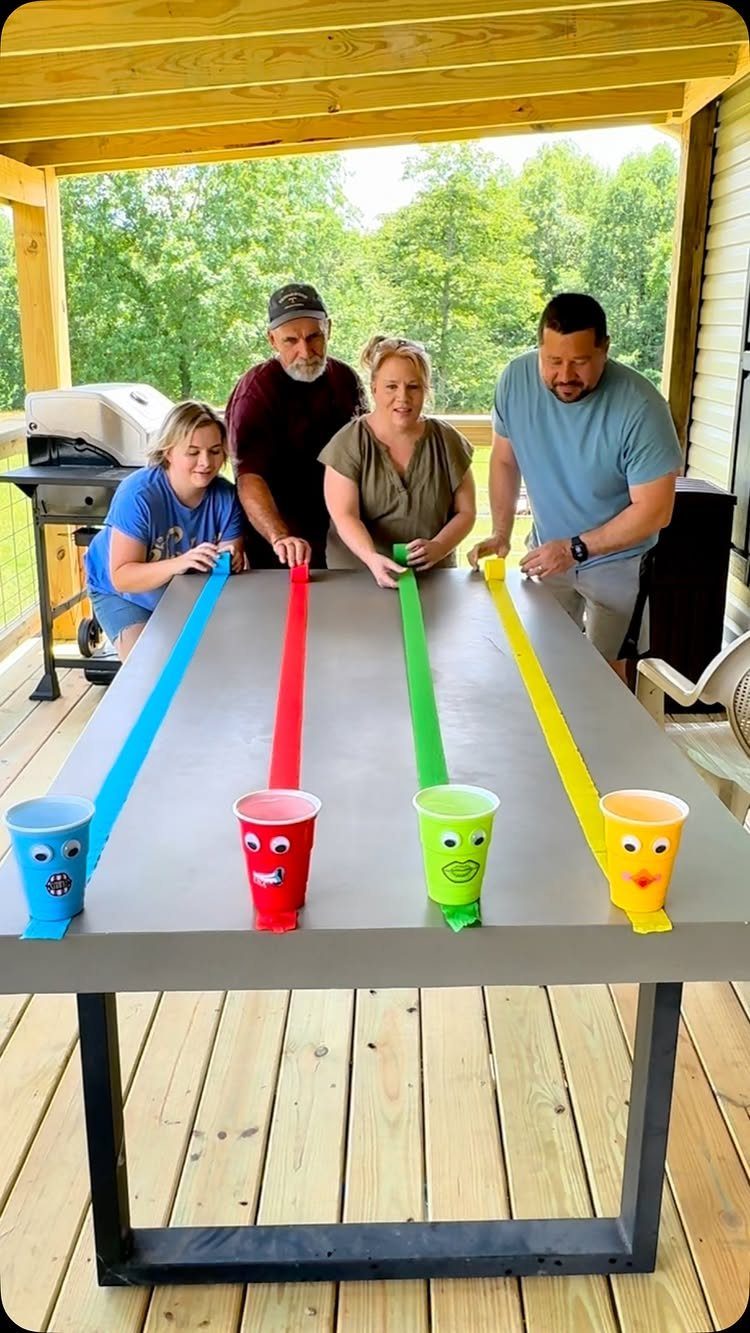
The race only works if every lane is the same length, so cut the paper strips together and compare them side by side before anyone plays.
Matching cups at the end of each strip make it easy to see who is winning. I’d play on a table that doesn’t wobble, since a bumped table decides the race faster than any player.
Best of 3 keeps it quick.
8. Balloon Pathway Table Game
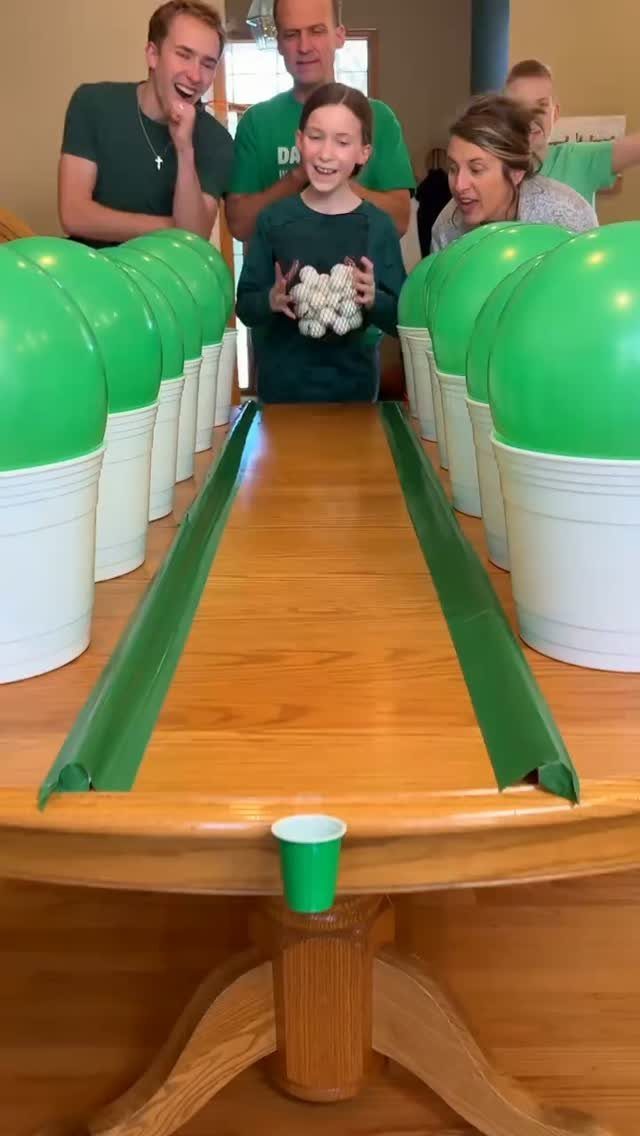
Green rails and balloons on a wooden table turn rolling a ball into a small obstacle course, with a cup waiting at the end of each path.
Cheap balloons make good bumpers, and a table with a lip or rails keeps balls from rolling off the edge. I prefer building it with the kids, because the placement is half the fun and a tweak mid-game is easy.
Keep a few spare balls nearby for the ones that escape.
9. Cardboard Box Cup Game
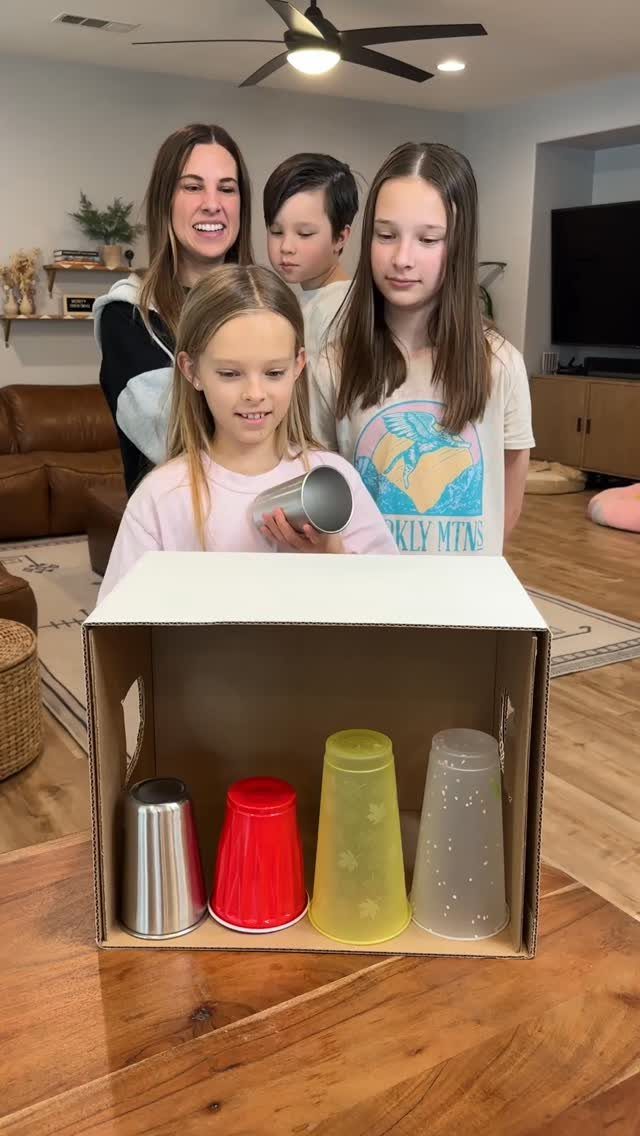
Cutting the front of a cardboard box open gives you a stage for upside-down cups, and the walls keep the whole game contained on a table.
Pick cups in different colors so younger players can call out which one they want. A box from the recycling pile costs nothing, which is why I like this one for a rainy afternoon.
Trim any rough cut edges before the game starts, since small hands will reach inside.
10. Living Room Trivia Video Game

Pajamas and a couch are all a category trivia game on the TV asks of you, and picking a topic like office supplies lets a kid answer as well as a grown-up.
I’d take turns choosing categories so nobody gets stuck with a subject they know nothing about. Sit close enough to share one controller or phone, and let the younger player answer first.
Needs a screen and a console or app, so check that it’s ready before you gather everyone.
Benefits of Family Games
Games give a family a reason to sit in the same room with nothing else competing for attention. Talk happens in the gaps between turns, which is why a slow game often works better than a fast one.
Classic games that need no batteries or equipment are worth keeping in rotation. Informal ones like these can build language and memory skills in kids, and I’d never mention that part to them.
Laughter is the real measure. If everyone is groaning or cheering, the game is doing its job, whatever the score says.
Games for All Ages
Games that suit a 7-year-old rarely hold a teenager. Candy Land and Memory work for little kids, but the mix gets harder once ages spread out.
Simple, easy-to-learn family games like these tend to work for a wide range, from about age 6 to adult, and they break the ice when relatives or friends who barely know each other are in the room.
Let the oldest kids help teach the rules. They stay engaged, and the youngest players learn faster from a sibling than from a rulebook.
Minimal Preparation Required
Spontaneous play depends on keeping supplies where you can grab them. A single drawer or bin with paper, pencils, a timer, and a few spare balls means a game can start as soon as someone suggests it.
Choose games with rules you can explain in one breath. If the explanation runs longer than the first round, save that game for a planned night.
Frequently Asked Questions
What’s a good game to play with family?
A tile-laying board game works because the rules make sense within a round or two and you can set it up in under a minute.
Put phones in another room before you start, which does more for the hour than any single game will. For a quicker option, charades, hide and seek, and would you rather are popular with families.
What are some funny family games?
In Face the Cookie, you lie flat, set a cookie on your forehead, and work it down to your mouth without using your hands.
In back-to-back drawing, one person traces a shape on someone’s back, that person draws what they felt on the next person’s back, and the final drawing usually looks nothing like the original.
Telephone pictionary and complete the story also tend to get big laughs.